

 1 hour ago
6
1 hour ago
6
ARTICLE AD BOX
The case arose from a relationship in which the appellant, employed as domestic help in the respondent's household for three years, alleged that the respondent established a sexual relationship with her on the pretext of marriage. The parties eventually married in March 2016, and a child was born the following month, in April 2016.
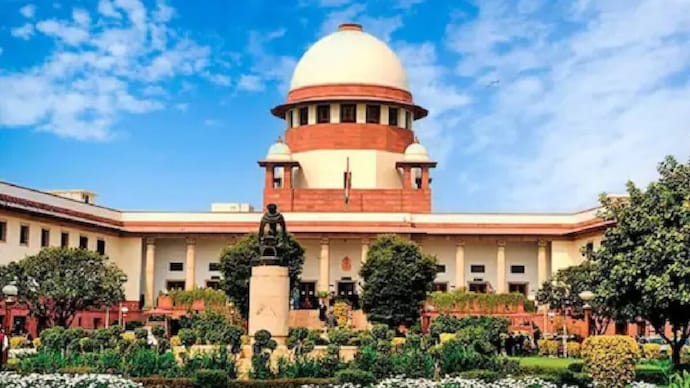
Supreme Court (File photo: ITG)
New Delhi,UPDATED: Apr 23, 2026 07:43 IST
The Supreme Court has held that a man cannot be compelled to pay maintenance for a child once a DNA test conclusively establishes that he is not the biological father — even if the child was born during the subsistence of a valid marriage.
A Bench comprising Justice Sanjay Karol and Justice NK Singh upheld a Delhi High Court judgment and dismissed an appeal filed by a woman challenging the denial of maintenance to her daughter.
BACKGROUND OF THE CASE
The case arose from a relationship in which the appellant, employed as domestic help in the respondent’s household for three years, alleged that the respondent established a sexual relationship with her on the pretext of marriage. The parties eventually married in March 2016, and a child was born the following month, in April 2016.
However, the marital relationship deteriorated rapidly, leading the woman to approach the court in July 2016. She sought interim maintenance of Rs 25,000 per month and a protection order for herself and her minor child against her estranged husband and his family.
TRIAL AND APPELLATE FINDINGS
During the proceedings, the Trial Court allowed the respondent’s request for a DNA test. The report concluded that the respondent was not the biological father of the child. Relying on this finding, and noting that the appellant had allegedly concealed her income, the Trial Court rejected her plea for interim maintenance.
The First Appellate Court upheld this decision, observing that the claim for the child’s maintenance was no longer being pressed and agreeing with the Trial Court on the issue of concealment.
DELHI HIGH COURT'S OBSERVATIONS
The Delhi High Court examined the legal presumption of legitimacy under Section 112 of the Indian Evidence Act, 1872, which ordinarily protects children born during a valid marriage. The Court said that protection of this section would have been available to the appellant only if the DNA test, which has attained finality, had not been conducted, since the intent of the Section is to grant the presumption of legitimacy to every child.
Since the DNA test had been conducted with the appellant’s consent and its findings remained undisputed, the High Court ruled that the statutory presumption stood rebutted. It therefore denied maintenance for the child while remanding the issue of the woman’s maintenance to the Trial Court for reconsideration.
SUPREME COURT'S RULING
Affirming the High Court’s decision, the Supreme Court acknowledged the judiciary’s general reluctance to order DNA tests in paternity disputes. However, it emphasised that the present case was distinct, as the test had already been conducted, accepted by the parties, and had attained finality.
The Court held that when such conclusive scientific evidence is available, it must prevail over the statutory presumption under Section 112. Consequently, the respondent could not be held liable to pay maintenance for a child proven not to be his.
Finding no legal infirmity in the High Court’s reasoning, the Court dismissed the appeal as “bereft of merit.”
CHILD WELFARE CONCERNS
Despite its ruling, the Court expressed concern for the welfare of the child, acknowledging that legal clarity does not eliminate the practical hardships faced. To address this, it directed the Secretary of the Women and Child Development Department, Government of NCT of Delhi, to assess the child’s living conditions, including access to education, nutrition, healthcare, and basic necessities.
The Court further directed that appropriate remedial measures be taken wherever deficiencies are identified, underscoring the State’s responsibility to safeguard the child’s well-being.
- Ends
Published By:
Nitish Singh
Published On:
Apr 23, 2026 07:43 IST
Tune In


 English (US) ·