

 1 hour ago
5
1 hour ago
5
ARTICLE AD BOX
3 min readNew DelhiFeb 20, 2026 05:30 AM IST
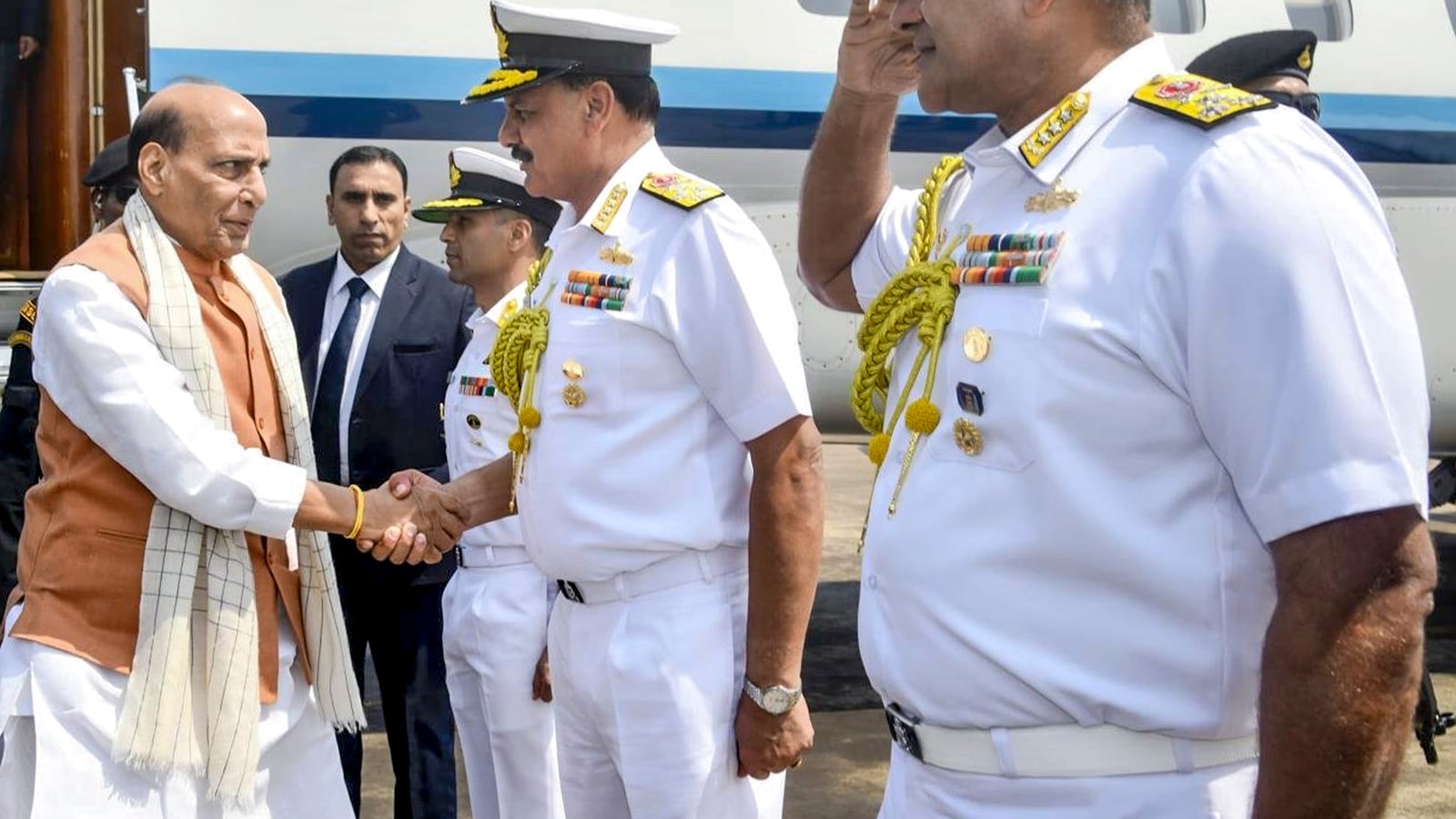 Defence Minister Rajnath Singh being received by the Chief of Naval Staff Admiral Dinesh K Tripathi and other officers upon his arrival for the inauguration of the thirteenth edition of Indian Navy’s multilateral exercise ‘MILAN’, in Visakhapatnam on Thursday. (PTI)
From piracy, maritime terrorism, disruptions to critical supply chains to climate change besides the traditional threats, Defence Minister Rajnath Singh on Thursday said that no single Navy, however capable, can address these challenges alone and sought enhanced cooperation among the naval forces to ensure a safer and more secure future.
“There has been an exponential economic growth during the last few decades, leading to a massive increase in international trade and transport,” he said, addressing Navy Chiefs and heads of delegations from 74 countries during the inaugural ceremony of Exercise MILAN at Visakhapatnam. He added there has also been a rise in contests for ownership of straits and channels, sometimes causing threats of flare-up.
“Increasing international attention to underwater resources, particularly rare-earth minerals, is adding a new dimension to this tension. In addition, there is a need to guard our waters from nefarious terrorist activities,” he said. Stating that traditional threats coexist with emerging challenges such as piracy, maritime terrorism, illegal fishing, trafficking, cyber vulnerabilities, and disruptions to critical supply chains, he said climate change is intensifying natural disasters, making humanitarian and disaster relief operations more frequent and demanding.
“No single Navy, however capable, can address these challenges alone,” he said, underscoring the need for enhanced cooperation among the Navies to ensure a safer and more secure future.
He said the robust legal framework provided by 1982 United Nations Convention on the Law of the Sea (UNCLOS) to address matters related to international waters can be further strengthened by a comprehensive global naval architecture.
Talking about MILAN 2026, he said it brings together professional expertise, builds mutual trust, enhances interoperability, and enables coordinated responses to common challenges.
“When our ships sail together, when our sailors train together, and when our commanders deliberate together, we build a shared understanding that transcends geography and politics and provides an opportune moment to deliberate on this idea of cooperation,” he said.
Story continues below this ad
Singh said that as a trusted vishwa mitra (global friend), India will continue to play a constructive and dependable role in the region, underlining that holistic maritime security and mutual prosperity are indivisible, and can only be achieved through cooperation, trust, and shared commitment among like-minded nations.
Calling MILAN 2026, the reflection of the confidence the global maritime community places in India as a trusted and responsible maritime partner, he said, “We aspire to establish an equitable maritime order based on international rules and freedom of navigation in accordance with international law.”
In his opening remarks, Chief of the Naval Staff Admiral Dinesh K Tripathi compared MILAN to a “maritime mahakumbh” in which professionals come together, united by a common commitment and purpose to keep the seas safe, secure and open.He said that the approach to this complex maritime environment is rooted in PM Narendra Modi’s vision of MAHASAGAR, an inclusive and collaborative approach based on partnership and shared responsibility.
MILAN 2026 is among the largest and most complex editions of the Indian Navy exercise to date, bringing together naval ships, aircraft and professional delegations from 74 countries. It will be conducted in two phases — harbour phase and sea phase. The harbour phase focuses on strengthening professional interaction and fostering mutual understanding.
Story continues below this ad
The sea phase will feature a series of advanced operational exercises at sea.




 English (US) ·