

 1 week ago
6
1 week ago
6
ARTICLE AD BOX
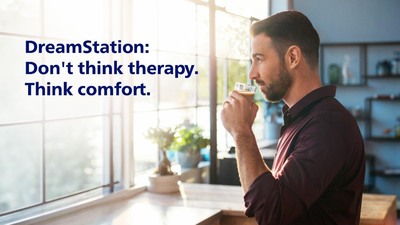
Every person is unique, from our personalities to our sleeping habits. Some fall asleep as soon as their heads hit the pillow, while some need to count sheep. Yet those who live with obstructive sleep apnea or OSA face a different struggle, loud snoring, repeated complete or partial hindrance of the upper airway that may disrupt sleep and lead to excessive daytime sleepiness1.In India, moderate to severe OSA affects 30.5% of people, and becomes increasingly common after 50 years of age2.It matters how well you sleep, as insufficient sleep hampers physical, mental and quality of life.1 You know you’ve had good quality sleep when you wake up in the morning feeling awake, refreshed, alert, high on energy and less stressed3.For patients with OSA, when the doctor prescribes CPAP or BiPAP therapy to help you breathe with ease and feel refreshed, relief should be the first thing you feel.
However, sometimes, for first-time users, it may come with its own hurdles to cross, and some may give up on the treatment altogether.
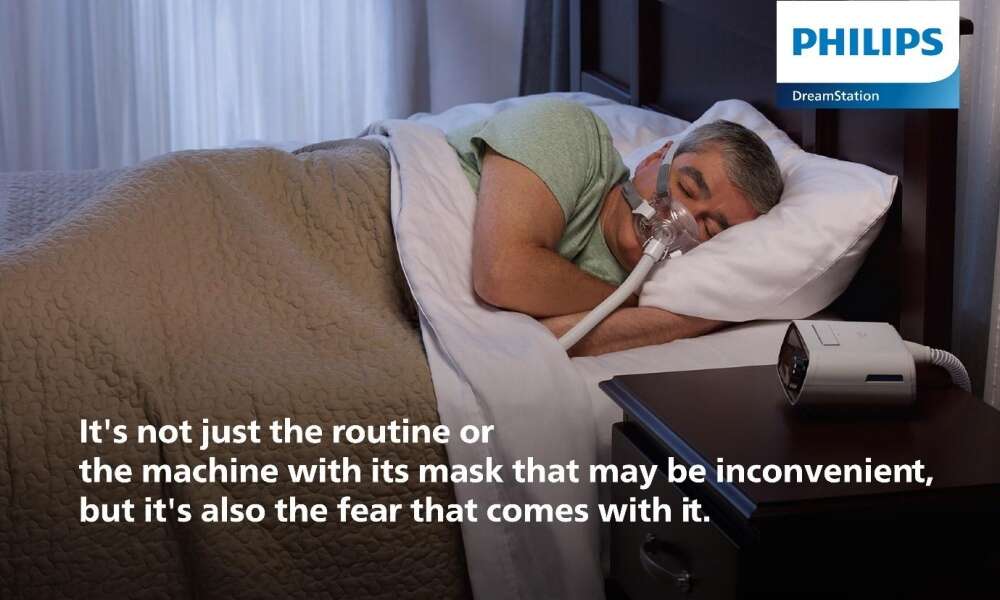
A study reported that claustrophobia with the mask was one of the reasons patients didn’t follow through with the therapy4.Dr. Samir D. Garde, Consultant in Respiratory Diseases, Interventional Pulmonology and Critical Care; Honorary Consultant, Global Hospital, Mumbai observed - “It is basically a non-physiological phenomenon where one has to sleep with a certain machine on his or her face, a mask sitting on the face, and then that person has to sleep the entire night wearing that mask. A machine is driving air with force in the patient's respiratory system. That concept itself is very uncomfortable for anyone, to be very frank. The first hurdle is acceptance of the diagnosis. The second thing is that it is so unnatural that I have to wear a mask where I may feel claustrophobic. And the third thing is the machine is driving too much pressure into my respiratory system. These hurdles can be overcome only with proper counselling, maybe not in the first counselling, maybe repeated counselling.” If you are feeling nervous about starting, you are not alone. What if your therapy device was designed to adapt to you and ease your fears from one restful night to another?Let’s leave fear behind, ADAPT with DreamStation.*Understanding how any PAP device works is the first step towards managing your health. For a first-time user, it might be a challenging and unfamiliar area. In such a case, understanding the device can make a big difference.Experts suggest that the initial experience with the machine is an important factor in long-term use of any PAP device5.Dr. Abhishek Goyal, Professor and Head, Department of Respiratory Medicine, Graphic Era Hospital points out, "If the patient is given the right therapy with the right device with the right mask after doing a proper titration, in my view, the chances of long-term adherence significantly increases as compared to giving a generic kind of PAP device."Philips DreamStation understands that any PAP machine needs some getting used to and understands every user has different needs.*DreamStation: Breaking down the basicsEZStart: Helps ease you in by gently increasing airflow over several days6.C-Flex and A-Flex: Automatically lowers the pressure when you breathe out, making each breath feel natural and easy6.SmartRamp: Allows you to fall asleep at a lower air pressure6.DreamWear masks: Designed to make you feel close to having nothing on your face, allow freedom of movement, and be comfortable6.Relax and breathe easier with DreamStation, sleep therapy built for your peace and comfort. It securely connects you to your doctor, so you always feel supported, confident, and on the right track to a better night's sleep.6,*Choose a device that helps make this transition smoother and stress-free. Explore your options and consult your physician to find the solution that suits you best. Don't let fear stand between you and the vibrant, energised you of tomorrow. After all, as Charlotte Brontë beautifully wrote, “A ruffled mind makes a restless pillow.”If you find yourself anxious about your device, explore to see if DreamStation can ease your journey here. Note: This article is intended for general informational purposes only and does not constitute medical advice. The content reflects Philips’ understanding of user experiences with PAP therapy. The Philips DreamStation is a regulated medical device, and its use should be based on a prescription and guidance from a qualified healthcare professional. Individual experiences with CPAP/BiPAP therapy may vary, and readers should consult their physician or respiratory therapist before initiating or modifying treatment. Philips makes no guarantees regarding outcomes beyond those supported by approved indications and regulatory clearances. Users should consult their physician or respiratory therapist for personalised medical advice.References:
- Slowik JM, Sankari A, Collen JF. Obstructive Sleep Apnea. [Updated 2025 Mar 4]. In: StatPearls [Internet]. Treasure Island (FL): StatPearls Publishing; 2026 Jan-. Available from: https://www.ncbi.nlm.nih.gov/books/NBK459252/
- Goyal A, Pakhare A, Pavirala ST, et al. Prevalence and association analysis of obstructive sleep apnea in India: Results from BLESS cohort. Sleep Med. 2025;125:128-135.
- Spytska L. The importance of quality sleep and its relationship with physical and mental health: a systematic review. Sleep Med Res. 2024;15(3):162-172.
- Goyal A, Agarwal N, Pakhare A. Barriers to CPAP Use in India: An Exploratory Study. J Clin Sleep Med. 2017;13(12):1385-1394.
- Goyal A, Joshi A, Mitra A, et al. Predictive factors for CPAP failure in obstructive sleep apnea patients. Lung India. 2021;38(6):540-544.
- Philips. Available from https://www.philips.co.in/healthcare/product/HCNOCTN447/dreamstation-cpap-bipap-cpap-bi-level-therapy-systems.
Disclaimer: The views and opinions expressed in the story are independent professional judgments of the doctors/experts, and TIL does not take any responsibility for the accuracy of their views. This should not be considered a substitute for medical advice. Please consult your treating physician for more details. This article has been produced on behalf of Philips by Times Internet’s Spotlight team.







 English (US) ·