

 1 hour ago
8
1 hour ago
8
ARTICLE AD BOX
Last Updated:April 22, 2026, 13:19 IST
Tehran sees Islamabad as an unreliable mediator after assurances on US engagement fell through and tensions escalated.


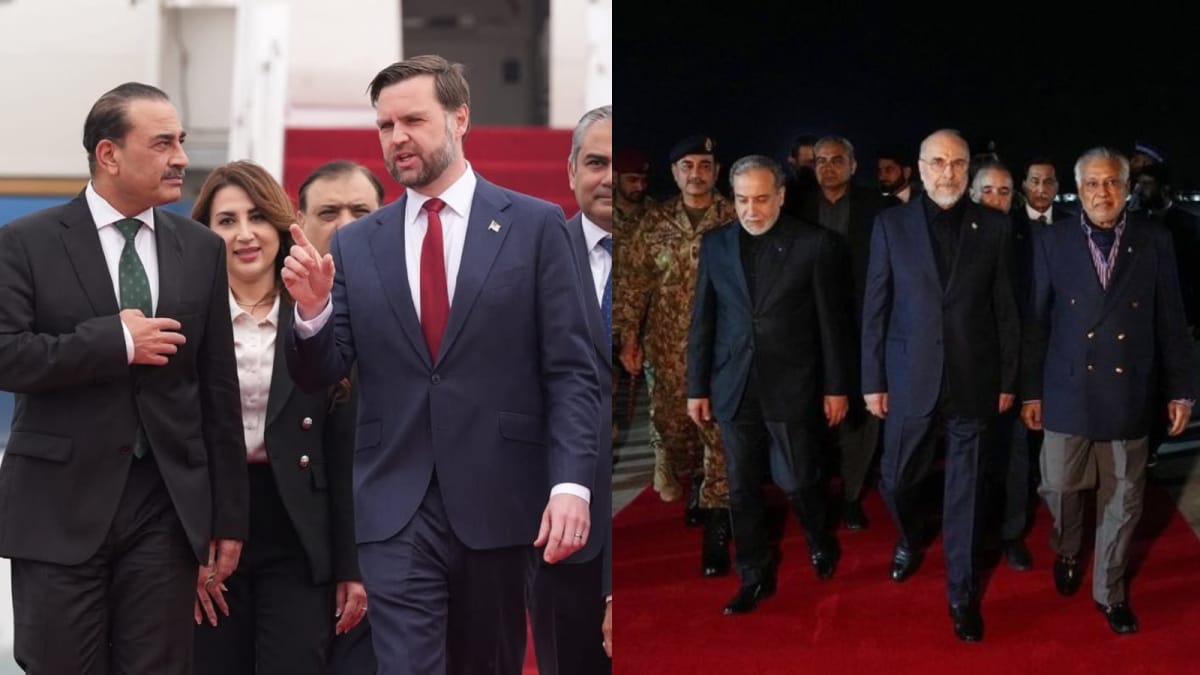
Iran welcomes Pakistan's Field Marshal Asim Munir in Tehran. (Image: X/@araghchi)
Pakistan’s military leadership under Asim Munir is facing mounting scrutiny, with top intelligence inputs accessed by CNN-News18 indicating a widening trust deficit between Islamabad and Tehran, alongside internal challenges that have raised serious questions about strategic credibility.
At the heart of the issue lies Pakistan’s attempt to position itself as a mediator between the United States and Iran, a role that now appears to have backfired.
Why Is Iran Upset With Pakistan’s GHQ?
According to top intelligence sources, the Iranian leadership is deeply dissatisfied with Pakistan’s handling of backchannel diplomacy. Islamabad had reportedly assured Tehran that it could “manage everything" with US President Donald Trump and secure outcomes favourable to Iran.
However, sources say that during a recent visit to Tehran, Asim Munir was handed a list of demands by the Iranian side — demands that were never conveyed to Washington. This omission, which has also been flagged by Tehran, has significantly eroded trust.
Iranian officials are also said to be uncomfortable with Trump’s repeated public criticism of Iran, which they believe was indirectly enabled by Pakistan’s assurances. Intelligence inputs suggest that Pakistani leadership may have downplayed Iran’s strategic importance in conversations with Washington, further aggravating tensions.
Despite internal reservations, including concerns over security and diplomatic conduct in Islamabad, Iran had initially shown willingness to engage in talks. However, that confidence has since weakened, with Tehran now viewing Pakistan as an unreliable interlocutor.
Sources indicate that Iran believes Pakistan has been inconsistent in its messaging, not just with Tehran but also with major global powers including the United States, China and Russia.
Mediation Efforts Collapse Amid Growing Distrust
The situation worsened when Iranian Foreign Minister Abbas Araghchi raised concerns over “bad faith" during ongoing diplomatic efforts. This came after the United States seized an Iranian cargo vessel during the same period that Pakistan was facilitating talks, a development that Tehran saw as contradictory to the assurances it had received.
Iran’s response was swift. It reimposed shipping controls in the strategically crucial Strait of Hormuz, effectively stalling any progress in mediation efforts that Pakistan had projected as a breakthrough.
The episode has reinforced Tehran’s view that Pakistan lacks the ability to guarantee either diplomatic neutrality or security assurances — both critical for any mediation role.
Credibility Questions After OSINT Exposure
Separately, Pakistan’s military leadership has also faced embarrassment over a controversial claim linked to a purported strike against India.
According to intelligence inputs, General Munir had presented a photograph to Prime Minister Shehbaz Sharif as evidence of a successful military operation. However, independent OSINT investigators later identified the image as a manipulated photograph of a Chinese PHL-03 rocket launcher from a past military exercise.
The revelation has raised serious concerns over internal verification processes within Pakistan’s military establishment and has further dented the credibility of the General Headquarters (GHQ).
Security Challenges Along The Afghanistan Border
The military’s troubles are not limited to diplomacy. Pakistan continues to face rising instability along its western frontier with Afghanistan.
Despite launching Operation Ghazab lil-Haq, attacks by the Tehrik-i-Taliban Pakistan (TTP) have reportedly increased. Intelligence sources indicate that Munir himself acknowledged the situation as a “massive intelligence failure" during high-level GHQ meetings earlier this year.
This admission points to a deeper breakdown in Pakistan’s ability to manage cross-border threats, even as internal pressure mounts on the military leadership.
Economic Promises Under Scrutiny
Munir’s expanding role has also extended into economic management through the Special Investment Facilitation Council (SIFC), which was projected as a mechanism to attract large-scale foreign investment.
While billions in foreign direct investment were promised, sources say that many of the anticipated deals — particularly from Gulf nations — have not translated into actual inflows. Investor concerns over political instability and the military’s increasing involvement in civilian economic domains have further complicated the situation.
By linking the military’s credibility to economic performance, the current leadership now faces criticism for rising inflation and stagnation in key sectors, including small and medium enterprises.
Internal Strains Within The Military
Amid these overlapping challenges, intelligence inputs suggest growing internal friction within Pakistan’s military hierarchy. General Munir is reportedly under pressure and has been critical of his own senior commanders in an effort to maintain control and contain dissent.
Taken together, the developments point to a convergence of diplomatic setbacks, security failures, and economic pressures — all of which have intensified scrutiny on Pakistan’s military leadership and its ability to navigate an increasingly complex geopolitical landscape.
Handpicked stories, in your inbox
A newsletter with the best of our journalism
First Published:
April 22, 2026, 13:19 IST
News world Pakistan’s Mediation Gamble Fails? Why Iran Is Upset With Asim Munir | Exclusive
Disclaimer: Comments reflect users’ views, not News18’s. Please keep discussions respectful and constructive. Abusive, defamatory, or illegal comments will be removed. News18 may disable any comment at its discretion. By posting, you agree to our Terms of Use and Privacy Policy.
Read More







 English (US) ·