

 1 day ago
4
1 day ago
4

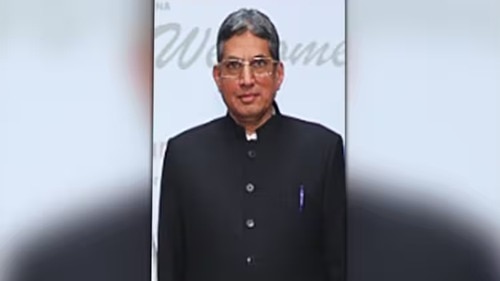
Raichur Lok Sabha member G. Kumar Naik has expressed concern over what he described as the Union government’s “procedural and non-committal” response to issues relating to High-Fat, Sugar and Salt (HFSS) foods and Ultra-Processed Foods (UPFs), stating that key policy questions remain unanswered despite mounting public health evidence.
In a media note released on February 18, Mr. Naik said the government’s written reply to his question in the Lok Sabha acknowledged the regulatory framework in place but did not outline a concrete national strategy to curb rising UPF consumption .
Mr. Naik had sought clarity on whether the Centre was considering a comprehensive national strategy to address the growing consumption of UPFs, including stronger front-of-pack warning labels, restrictions on marketing to children, reformulation guidelines and coordinated fiscal measures. However, according to him, the response offered “no timeline, no roadmap and no indication of inter-ministerial coordination”.
Citing data from the Indian Council of Medical Research (ICMR), he noted that non-communicable diseases account for over 57% of deaths in India, and dietary risks linked to ultra-processed foods have been identified as a growing public health and economic concern. He also referred to the Economic Survey 2025-26, which recognised the risks associated with UPFs and recommended shifting them to the highest GST slab and replacing the existing health star rating system with clear front-of-pack warning labels.
“In a rare instance of broad consensus, 29 organisations endorsed the recommendation for stronger warning labels. Yet, there is little clarity on the next steps,” he said.
Mr. Naik pointed out that retail sales of ultra-processed foods had increased dramatically, from $0.9 billion in 2006 to nearly $38 billion in 2019, while obesity rates nearly doubled during the same period. “The numbers indicate a structural shift in dietary patterns, with serious long-term consequences,” he observed.
On the taxation front, he noted that aerated drinks, including no-sugar and low-sugar variants, currently attract 28% GST along with 12% compensation cess, taking the effective tax rate to 40%. He said that the GST Council’s reform in September 2025 removed the compensation cess but left the overall tax burden unchanged at 40%, while increasing working capital pressures for small traders.
“The broader question remains: if official reports recognise dietary risks as a mounting health and economic challenge, what follows from that recognition?” he asked.
Mr. Naik stressed the need for coherence between health advisories, tax policy, food regulation and norms relating to children’s consumption. “Without alignment across these domains, the rise of ultra-processed foods will continue to be addressed only through campaigns and compliance measures, even as the data points in a different direction,” he said.








 English (US) ·