

 6 days ago
7
6 days ago
7
ARTICLE AD BOX
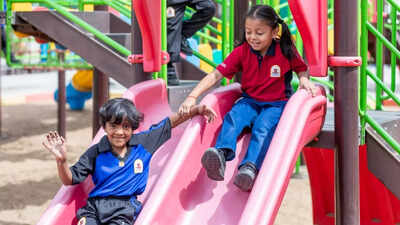
Conversations around education are increasingly questioning whether competition should remain at the centre of how success is defined for children. For decades, academic achievement has been framed through rankings, grades and individual performance, often positioning students in quiet rivalry with one another.
Modern educators argue that children also need skills that prepare them for life beyond school, not just for tests1.Research suggests that learning does not occur in isolation2. Children develop understanding, confidence and resilience through interaction, dialogue and shared problem-solving. When classrooms function as learning communities rather than competitive arenas, students are more likely to engage meaningfully with ideas and with one another.
This shift reflects a growing recognition that education should prepare children not only to perform, but to participate, collaborate and contribute within diverse social contexts.Collaboration, empathy and emotional intelligence are closely tied to stronger learning outcomes and student wellbeing. Inclusive, community-based classrooms that prioritise shared goals over competition help students feel supported, engaged and capable of contributing, enabling them to learn effectively through cooperation rather than individual ranking.How schools are shifting from competition to collaborationAs understandings of success evolve, many schools are adapting their teaching practices to place greater emphasis on cooperation and collective learning. This includes group-based projects, peer learning, reflective discussions and classroom cultures that reward effort, curiosity and teamwork alongside academic rigour. Such models encourage students to see learning as a shared journey rather than a zero-sum race.Orchids The International School, for instance, follows an approach that integrates academic learning with social and emotional development, reflecting a broader move towards nurturing collaborative learning environments. By balancing academic expectations with opportunities for peer interaction and shared problem-solving, schools are responding to growing concerns about the long-term impact of highly competitive educational settings.“As definitions of success evolve, we are seeing a clear shift from competition to collaboration in how children learn. Today, education is no longer a race for individual achievement, but a shared journey built on teamwork, curiosity, and responsibility. At Orchids The International School, this translates into learning environments that combine academic rigour with social and emotional development through group projects, peer learning, and reflective discussions.
We also focus on helping children understand their academic boundaries, manage subject-wise timelines, and adopt effective learning and memorisation techniques using modern methods. Alongside this, strong social and emotional cues help students stay focused, manage distractions, and build the skills they need to excel, academically and beyond,” said Archana Padhye, Head of the Department - Children with Special Needs (CWSN) at Orchids The International School. Rethinking achievement through community and connectionThis shift towards learning communities is reshaping broader conversations about what education should ultimately achieve. Rather than producing uniform outcomes or narrowly defined ‘top performers’, schools are increasingly focused on developing students who can work constructively with others, respect differences and adapt to complex social environments.
In this context, success is understood not as outperforming peers, but as growing together within a supportive learning ecosystem.Global education frameworks reinforce this perspective, highlighting collaboration, creative thinking and emotional resilience as critical skills for the future, particularly in a rapidly changing, technology-driven world. Research also shows that students in inclusive, emotionally supportive classrooms demonstrate higher engagement, stronger problem-solving abilities and improved wellbeing, outcomes that competitive pressure alone does not consistently deliver3.Parents and educators alike are beginning to recognise that children develop at different paces and bring different strengths to the classroom. As a result, there is increasing value placed on environments that prioritise emotional safety, dialogue and participation. In such settings, learning becomes less about comparison and more about sustained growth, confidence and shared understanding.Preparing kids for real-world challengesUltimately, prioritising learning communities over competitive tendencies is not about lowering standards, but about redefining them.
By fostering collaboration, inclusivity and collective responsibility, education moves closer to preparing children for real-world challenges that demand cooperation as much as competence. When success is measured by how well students learn together, support one another and grow over time, the purpose of education becomes more enduring and socially meaningful.As this understanding takes hold, it is also influencing how parents and educators think about learning environments and outcomes.
There is growing recognition that progress cannot be reduced to uniform benchmarks and that children develop at different paces and with different strengths. Increasingly, value is being placed on classrooms that encourage curiosity, emotional safety and participation, allowing students to build confidence alongside competence.
At this point, success begins to look less like a fixed destination and more like a sustained ability to learn, adapt and engage with the world.This shift in perspective is reflected in real-life stories where confidence, resilience and collective support enable children to achieve extraordinary milestones beyond conventional classroom measures.Ultimately, rethinking success in education is not about lowering expectations, but about reframing them. By valuing collaboration, inclusivity and shared learning alongside academic outcomes, education moves closer to preparing children for the realities of an interconnected and unpredictable world. Academic institutions such as Orchids The International School, which place emphasis on balanced development within supportive learning environments, reflect this broader shift in thinking.
Here, success is measured not solely by individual achievement, but by how students learn to engage with others, contribute meaningfully and grow within a community. When learning is rooted in cooperation rather than comparison, its purpose becomes more enduring and socially relevant.To know more about our curriculum, branches and admission process, visit Orchids The International School.References:
Disclaimer: This article has been produced on behalf of Orchids The International School by Times Internet’s Spotlight team.









 English (US) ·