

 1 hour ago
3
1 hour ago
3
ARTICLE AD BOX
The BJP is weighing Samrat Choudhary and Nityanand Rai for Bihar Chief Minister, balancing governance experience, caste equations and internal consensus as Nitish Kumar took oath as Rajya Sabha MP today.
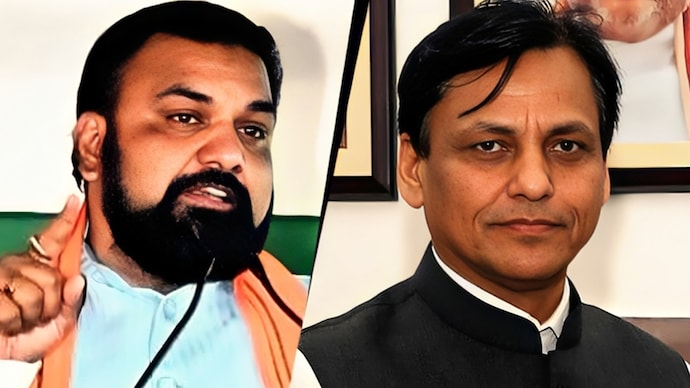
Samrat Choudhary is currently serving as Deputy Chief Minister while Nityanand Rai is the Union Minister of State for Home Affairs. (File photos)
Patna,UPDATED: Apr 10, 2026 13:05 IST
Bihar's political landscape is once again buzzing with speculation over the Chief Minister's post, with conversations within the National Democratic Alliance (NDA) gathering pace around future leadership as Nitish Kumar took oath as Rajya Sabha MP today.
Within the BJP, two names -- Deputy Chief Minister Samrat Choudhary and Union Minister of State for Home Affairs Nityanand Rai -- have emerged as key contenders, even as other options remain under discussion. The final call will rest with the party's central leadership, factoring in alliance dynamics and electoral strategy.
Samrat Choudhary, currently serving as Deputy Chief Minister, is seen as an administratively ready face. His hands-on role in governance, familiarity with the state machinery and involvement in development decisions place him in a strong position. His Kushwaha (Koeri) background adds a crucial caste dimension, given the electoral weight of the "Luv-Kush" combine in Bihar politics.
There is also a perception in political circles that outgoing Chief Minister Nitish Kumar's subtle signals in recent public appearances may favour Choudhary as a consensus candidate in case of a transition within the alliance.
However, his path is not without friction. Choudhary's past association with the Rashtriya Janata Dal (RJD) continues to invite scepticism among sections of BJP's cadre. Periodic signs of internal resistance -- such as opposition to posters projecting him as a CM face -- point to unresolved factional undercurrents, making clear backing from the central leadership critical.
Nityanand Rai, on the other hand, brings organisational depth and proximity to the BJP's top brass. A former Bihar BJP president, he is seen as a leader with a strong grassroots network. His current role in the Union Home Ministry further enhances his standing within the party.
Rai's biggest political lever lies in his Yadav identity. As the community has traditionally aligned with the RJD, projecting a Yadav face could signal a deliberate BJP push to breach this entrenched vote bank, potentially reshaping Bihar's electoral arithmetic.
Yet, Rai faces his own set of challenges. His administrative exposure within Bihar's state framework is limited compared to Choudhary, given his long stint in national politics. Leading a state government demands sustained local engagement, an area where he is seen at a relative disadvantage.
There is also a strategic question for the BJP. Its Bihar playbook has largely focused on consolidating non-Yadav OBC groups. Elevating a Yadav leader would mark a shift from that approach and could trigger internal debate. Additionally, Rai's current responsibilities at the Centre complicate the balance between national and state roles.
The broader calculus extends beyond individual contenders. BJP's recent decision to back another Kushwaha leader, Upendra Kushwaha, for the Rajya Sabha despite his smaller political base has raised questions about whether the party would again bet on the same social bloc for the top post.
At the same time, Rai's projection as a Yadav face could serve a wider strategy. A potential elevation may help the BJP make inroads into Bihar's roughly 14 per cent Yadav vote base ahead of the 2029 Lok Sabha elections, and could also have ripple effects in neighbouring Uttar Pradesh, where the community remains central to Samajwadi Party chief Akhilesh Yadav's support.
For now, the contrast is clear: Choudhary represents administrative continuity within the current framework, while Rai embodies a more calculated political gamble aimed at reshaping caste equations.
- Ends
Published By:
Sahil Sinha
Published On:
Apr 10, 2026 13:05 IST
Tune In



 English (US) ·