

 1 hour ago
5
1 hour ago
5
ARTICLE AD BOX
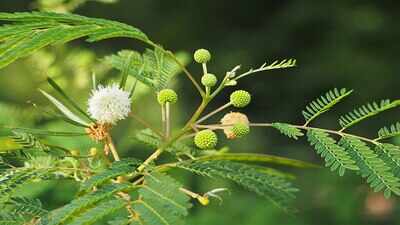
The leaves and spherical white flowers of Leucaena leucocephala, a species once widely planted for fodder and reforestation but now recognised as an invasive plant in several countries, including Thailand. Image Credits: Wikimedia Commons
Tree planting has always been viewed as one of the most effective means of bringing about restoration of degraded landscapes, tackling the impacts of climate change, and improving the lives of rural populations.
However, it is not necessarily every tree planted that proves to be useful in the long term. In Thailand, a massive project to plant trees, which started in the 1950s, led to millions of trees of a species called Leucaena leucocephala or the leucaena, being planted to bring about the restoration of barren lands and feed animals. Although the fast-growing tree had proven very successful in the first few years, it has now become a serious ecological problem for scientists.From restoration hero to ecological riskAfter the 1950s, Thailand sought an unusual green ally to help restore degraded landscapes and address livestock shortages. That tree was Leucaena leucocephala, which had all the features that decision-makers were looking for: soil enrichment, feedstock for cattle, wood supply, and rapid growth in poor conditions. Millions of trees were planted in the country; thus, leucaena became the main part of Thailand's afforestation and rural development programs.
Leucaena looked like a successful innovation for decades because farmers appreciated its regeneration potential while foresters benefited from using it in the process of erosion control. Because of its adaptability, the tree received the nickname of "miracle tree" and began to be cultivated not only in Thailand but in other tropical countries as well.Nevertheless, the traits that made the plant attractive to farmers- fast growth, abundant fruiting and hardiness- have also made it ecologically problematic. Today, scientists warn that Leucaena leucocephala has escaped cultivation and spread into natural forests, where it forms dense, single-species stands that crowd out native vegetation. According to the Global Invasive Species Database (GISD), this fast-growing, nitrogen-fixing tree can set abundant seed, remain viable in the soil for at least 20 years, and form dense monospecific thickets once established. It is reported as a weed in more than 20 countries and has already been flagged as likely to render disturbed ground unusable and inaccessible.How a useful tree took over native forestsWhile most planted trees do not venture out of their plantations, leucaena is an aggressive tree due to its thousands of durable seeds, which easily germinate in disturbed areas. It grows very fast and forms thick foliage that prevents light from falling on the ground.It changes the environment significantly. Seedlings native to the area have problems surviving underneath this thick cover; thus, the variety of other trees, bushes, and vines that naturally regenerate in disturbed areas is significantly decreased.
As time goes by, diverse forests are replaced by homogeneous areas with leucaena only.The ecological consequences are already visible in northeastern Thailand. A study conducted by Applied Environmental Research found that three 10 × 150 m belt transects were run from remnant forest into the adjacent plantation, with seedlings, saplings and trees censused alongside light and soil conditions. The plantation held only 16 species, and leucaena reached 1,196.7 stems ha−1 with a closed canopy that cut floor light to 18.5 ± 5.5%, while native stem density and species richness fell sharply toward the leucaena stand.
The study concluded that leucaena's invasive growth habit actively limits natural forest regeneration and alters vegetation dynamics.Scientists also note that these dense monocultures reduce habitat complexity for insects, birds and other wildlife that depend on diverse native plant communities. While the tree continues to provide fodder and fuelwood in managed landscapes, its unchecked spread into protected forests presents a growing conservation challenge.
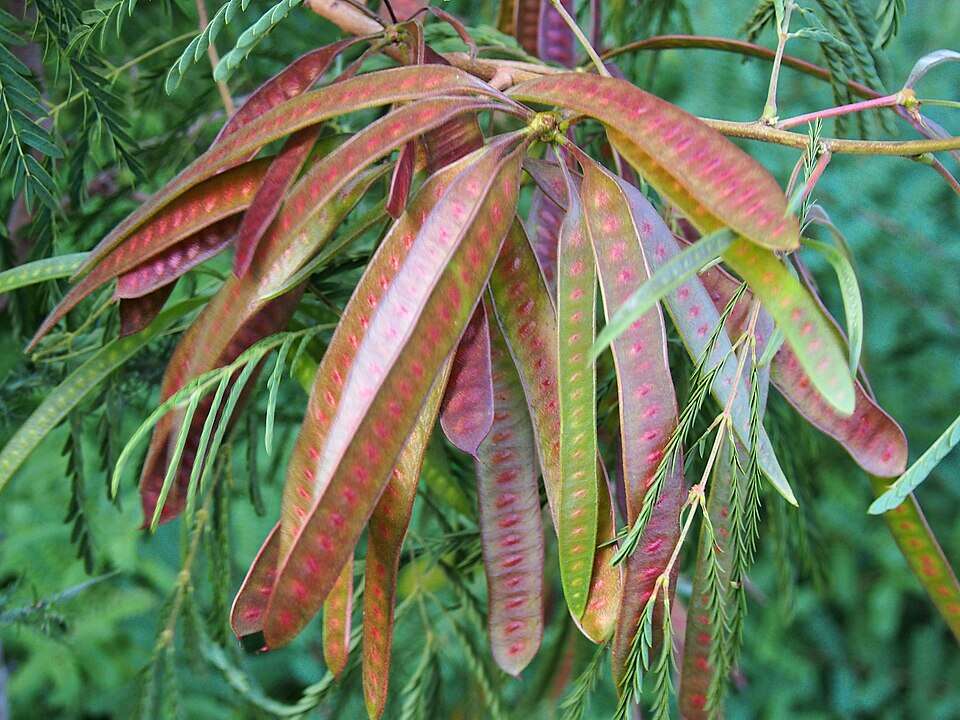
Leucaena leucocephala seed pods. The tree's prolific seed production enables it to spread rapidly beyond plantations, contributing to its invasive success in tropical forests. Image Credits: Wikimedia Commons
Contemporary ecological research shows quite a different picture.Scientists say environmental restoration projects should aim to restore sustainable ecosystems that can support native wildlife and maintain healthy soils and resilience to climate change. Although an ecosystem might be green from the top, it might be very different from the functioning of a sustainable native ecosystem.Research on Frontiers in Agronomy states that leucaena is not simply a weed: it is a self-compatible allotetraploid that flowers within 4–6 months, can produce about 5,500 seeds m−2 each year, and keeps a persistent soil seed bank for 10–20 years.
At the same time, the authors note that its mimosine-rich foliage, nitrogen fixation and broad agroforestry uses are exactly what make its management difficult once it escapes cultivation.The case of Thailand and leucaena proves that environmental measures may cause unforeseen negative effects decades later. A seemingly innocent project designed to regenerate damaged areas may result in creating an environmental issue if the introduced species end up competing with the native forest itself.As many nations pursue reforestation to mitigate climate change, the Thai case underscores a basic rule: it matters not only how many trees you plant, but where and which species you choose. Scientists claim that environmental restoration projects should aim at restoring sustainable ecosystems that could support native wildlife and maintain their own soil health and ability to adapt to changing climate conditions.
Although an ecosystem might be green from the top, it might be very different from the functioning of a sustainable native ecosystem.









 English (US) ·