

 20 hours ago
4
20 hours ago
4
ARTICLE AD BOX
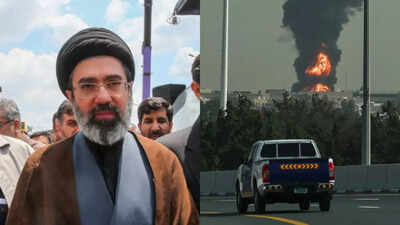
Iran’s supreme leader Mojtaba Khamenei has vowed retaliation, US President Donald Trump has escalated rhetoric against allies, and US intelligence chief Tulsi Gabbard has warned that Iran’s leadership is weakened but still “intact”, as the war enters a dangerous new phase. With airports hit, energy infrastructure under attack and widespread destruction across Iran, Israel and beyond, the conflict is rapidly expanding into a regional crisis with mounting civilian and economic fallout.
US -Iran war day 19 top developments
Iran vows revenge after top killings as war enters day 19
‘Criminals have to pay soon for his blood’: Mojtaba Khamenei on Larijani killing: Iran has pledged “revenge” after Israeli strikes killed security chief Ali Larijani and Basij commander Gholamreza Soleimani, marking a sharp escalation as the war entered its 19th day.
Iran’s supreme leader Mojtaba Khamenei in a statement said, “Criminals have to pay soon for his blood,” reacting to Larijani’s killing.Foreign Minister Abbas Araghchi sought to project resilience, saying the country’s political system remains intact despite mounting leadership losses.“I do not know why the Americans and the Israelis still have not understood this point,” Araghchi said. “The Islamic Republic of Iran has a strong political structure with established political, economic, and social institutions.”
He added, “The presence or absence of a single individual does not affect this structure.”
Energy sites hit, oil prices surge
US and Israeli strikes targeted Iran’s key energy infrastructure, including the South Pars gas facility, triggering fires and raising fears of global supply disruption.Iranian state TV said, “Moments ago, parts of the gas facilities located in the South Pars Special Economic Energy Zone in Asaluyeh were struck by projectiles fired by the American-Zionist enemy.”Authorities later said the situation was under control, with firefighters deployed and no casualties reported. Brent crude surged more than 5 percent as markets reacted to the escalation.Iran government ‘intact’ despite heavy blows, says US intel chief
Top Iranian leaders killed in strikes
Iran confirmed the deaths of senior leaders, including Ali Larijani and Gholamreza Soleimani, in Israeli strikes, marking a major blow to Tehran’s leadership.Russia condemned the killings, with the Kremlin saying, "We firmly condemn actions aimed at harming the health and, even more, the killing of the leadership of sovereign and independent Iran. We condemn such actions."Separately, Iran’s intelligence minister Esmail Khatib was reported killed, with Iran’s president acknowledging the “assassination” of the minister.Israeli defence minister Israel Katz said “significant surprises are expected throughout this day on all fronts,” signalling further operations.
Missile strikes hit Israel, airport damaged
Iran launched fresh missile barrages targeting central Israel, triggering explosions across Tel Aviv and surrounding areas. Two people were killed in Ramat Gan, with heavy damage to buildings and infrastructure.Israeli authorities said “debris” struck Ben Gurion Airport, with reports that three private aircraft were severely damaged.
Iran retaliation spreads across region
The conflict is widening beyond Iran and Israel, with missile and drone attacks reported in Saudi Arabia, Kuwait, Qatar and the UAE. Air defence systems intercepted multiple threats, while warning sirens sounded across several countries.Iran also warned it could escalate further, stating it would “severely strike the source of the aggression and consider targeting the fuel, energy and gas infrastructure” of countries linked to the attacks.
Hormuz crisis deepens, global response underway
The Strait of Hormuz remains heavily disrupted, with hundreds of vessels stranded and global energy flows affected. NATO allies are discussing ways to reopen the route.“We all agree, of course, that strait has to open up again,” NATO chief Mark Rutte said. “And what I know is that allies are working together, discussing how to do that, what is the best way to do it.”The US has urged global powers to deploy naval escorts for oil tankers amid the crisis.
Trump lashes out at allies, escalates rhetoric
US President Donald Trump criticised allies for failing to support Washington’s military efforts.In a post on Truth Social, he wrote, "I wonder what would happen if we ‘finished off’ what’s left of the Iranian Terror State, and let the Countries that use it, we don’t, be responsible for the so called ‘Straight?’ That would get some of our non-responsive ‘Allies’ in gear, and fast!!!"
Political tensions rise in Washington
The war has triggered political fallout in the United States, with senior counterterrorism official Joe Kent resigning.He said, “we started this war due to pressure from Israel and its powerful American lobby”.The resignation has intensified scrutiny of US involvement in the conflict.
Regional conflict widens to Lebanon and Iraq
Israel expanded operations in Lebanon, issuing large-scale evacuation orders in the south and carrying out airstrikes in Beirut and the Bekaa Valley, where civilians were killed.In Iraq, drones and rockets targeted the US embassy in Baghdad, with air defences intercepting multiple threats.
An armed group claimed responsibility for attacks on US targets.
India moves to secure shipping amid energy disruption
India has deployed additional warships to escort its vessels in the Gulf region, with over 1.7 million tonnes of energy cargo stranded due to disruptions in the Strait of Hormuz.Officials said 22 Indian-flagged ships with 611 seafarers remain in the Gulf, all of whom are safe.Prime Minister Narendra Modi stressed the need for “safe and free navigation through the Strait of Hormuz” in talks with regional leaders.
Global reactions intensify
Russia condemned strikes near Iran’s Bushehr nuclear plant, calling them “completely unacceptable”.“We strongly condemn the irresponsible, completely unacceptable missile strike launched against the inner perimeter of the Bushehr Nuclear Power Plant,” it said.Germany also criticised the war, with Chancellor Friedrich Merz stating, “we would have advised against taking this course of action” and warning there was “no convincing plan” for success.
Civilian toll rises amid widening crisis
Iran says at least 1,444 people have been killed and over 18,500 injured since the strikes began on February 28.Civilian areas in Iran and Lebanon have been hit, with casualties reported across multiple regions. The conflict has disrupted global trade, energy markets and diplomatic efforts.As both sides escalate, the crisis is reshaping the Middle East’s geopolitical landscape, with no clear path to de-escalation.







 English (US) ·