

 1 hour ago
6
1 hour ago
6
ARTICLE AD BOX
Can abusive language alone be a crime? The Supreme Court's latest ruling draws a sharp line between vulgarity and obscenity, potentially reshaping how everyday altercations are treated under criminal law.
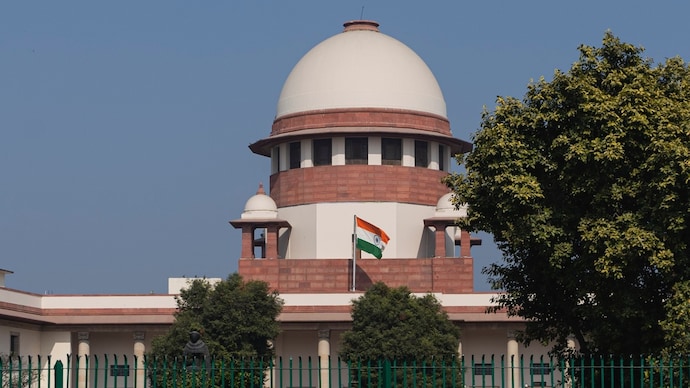
Supreme Court held abusive language without sexual context not obscene.
UPDATED: Apr 8, 2026 10:35 IST
In a significant ruling on criminal law, the Supreme Court on April 6 held that the mere use of abusive language such as “bas***d” during a heated argument does not amount to obscenity under Section 294 of the Indian Penal Code, reported Live Law.
A Bench of Justice PS Narasimha and Justice Manoj Misra said that for an offence under Section 294 IPC to be made out, the words must carry a sexual or prurient element. Mere abuse, the Court said, is not enough.
“In our view, mere use of the word ‘bas***d’, by itself, is not sufficient to arouse the prurient interest of a person. More so, when such words are commonly used in the modern era during heated conversations. We are, therefore, of the view that conviction of the appellants for the offence punishable under Section 294(b) IPC is not sustainable and is hereby set aside,” the Bench said, reported Live Law.
CONVICTION SET ASIDE IN PROPERTY DISPUTE CASE
The Court set aside the conviction of two accused who had been found guilty under Section 294(b) IPC by the Madras High Court. The case stemmed from a family property dispute over a common boundary, where an altercation broke out after the deceased attempted to fence the land.
During the argument, the accused allegedly used the word “bas***d”, which led to their conviction for obscenity.
Before the Supreme Court, the accused argued that no offence under Section 294 IPC was made out. The State, however, maintained that the abusive language attracted the provision.
The Bench rejected the State’s argument, holding that the word in question does not contain any sexual or prurient element and therefore cannot be classified as obscene.
WHAT COUNTS AS OBSCENE UNDER IPC
The Court noted that the term “obscene” is not specifically defined in the IPC. It referred to Section 292 IPC to explain that obscenity involves material that has the potential to appeal to prurient interest.
“The word ‘obscene’ is not specifically defined in IPC. However, by referring to Section 292 of IPC, it has been construed as something which has the potential to appeal to the prurient interest of a person,” the Bench said.
Drawing from its earlier ruling in Apoorva Arora v State, the Court reiterated that obscenity relates to content that arouses sexual or lustful thoughts, not language that merely shocks or disgusts.
“Vulgarity and profanities do not per se amount to obscenity. While a person may find vulgar and expletive-filled language to be distasteful, unpalatable, uncivil, and improper, that by itself is not sufficient to be ‘obscene’,” the Court said, quoting from the earlier judgment.
LEGAL CLARITY IN EVERYDAY SPEECH
The ruling makes it clear that abusive or vulgar language, in the absence of a sexual element, cannot be prosecuted as obscenity under Section 294 IPC.
With this, the Court concluded that the provision was not attracted in the present case and set aside the conviction.
- Ends
Published By:
Sonali Verma
Published On:
Apr 8, 2026 10:33 IST
Tune In





 English (US) ·