

 1 hour ago
4
1 hour ago
4
ARTICLE AD BOX
Last Updated:December 08, 2025, 09:14 IST
As Vande Mataram completes 150 years, Parliament will debate its origins, the 1937 controversy, and the political dispute between the BJP and Congress over its full verses.

The journey of Vande Mataram illustrates how a song can evolve into a movement. (Representative/News18 Hindi)
As Parliament convenes for a special discussion on 150 years of Vande Mataram, the national song has returned to the centre of India’s political conversation. On Monday, the Lok Sabha will hold a ten-hour special debate, with Prime Minister Narendra Modi set to address the House and Defence Minister Rajnath Singh to conclude it. A parallel debate of similar length is planned in the Rajya Sabha on Tuesday, where Home Minister Amit Shah will speak.
For a composition written in the 1870s, Vande Mataram continues to evoke powerful responses across the political spectrum. The government says the debate will reveal “important and unknown facets" of the song. The opposition remains divided on the issue. While the Trinamool Congress (TMC) has supported the discussion, the Congress has questioned the timing of the debate and accused the government of using it as a distraction from electoral reforms and the SIR issue.
Why has a 150-year-old poem become the subject of a major parliamentary confrontation? The answer lies in its layered history, its emotive presence in the freedom struggle, and the competing political narratives around what the song represents, and who has the right to claim it.
PM Modi’s Charge Against The Congress
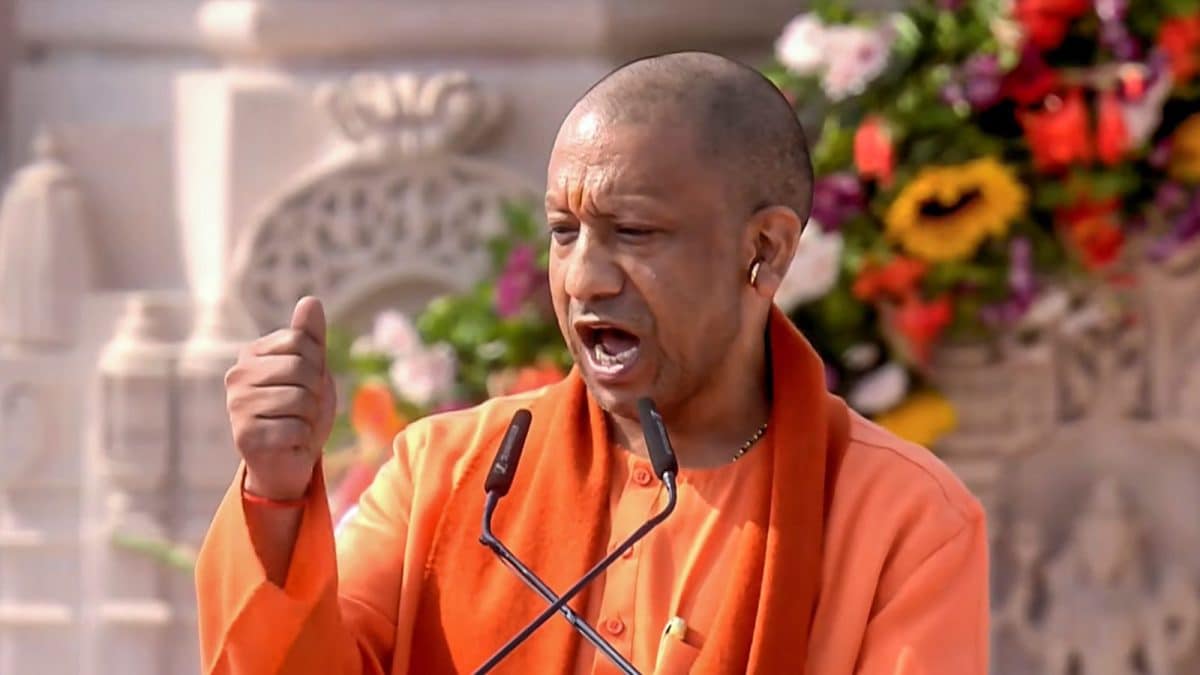
Last month, Prime Minister Modi sharply criticised the Congress over a decision taken in 1937 regarding the national song. “Vande Mataram became the voice of India’s freedom struggle, it expressed the feelings of every Indian. Unfortunately, in 1937, important stanzas of Vande Mataram… a part of its soul, were separated. The division of Vande Mataram also sowed the seeds of partition. Today’s generation needs to know why this injustice was done with this ‘maha mantra’ of nation building… this divisive mindset is still a challenge for the country," PTI quoted him as saying.
He also said “crucial verses of ‘Vande Mataram’, a part of its soul, were severed" and described the act as “injustice".
The Prime Minister recited all six stanzas of the original composition and accused the Congress of bowing to pressures decades before independence.
Congress Pushes Back, And Cites Tagore
The Congress has rejected the allegation. Responding to the charge, the party referred to the 1937 Working Committee decision that involved Mahatma Gandhi, Jawaharlal Nehru, Sardar Patel, Subhas Chandra Bose, Rajendra Prasad, Maulana Azad and Sarojini Naidu.
According to the Congress, only the first two stanzas were adopted because the remaining verses contained religious imagery that had triggered objections among segments of the Muslim community. The party argues the decision was taken to ensure unity within the freedom movement. Congress leaders also cited a letter from Rabindranath Tagore to Jawaharlal Nehru, where Tagore urged that only two stanzas be used, and demanded an apology from the Prime Minister.
The party further accused PM Modi of distorting history and of attempting to divert attention from current national issues.
What The BJP Plans To Highlight In The Debate
BJP spokespersons have signalled that the party will foreground historical disagreements during the parliamentary discussion. On Sunday, Sambit Patra said Nehru’s “real stance" would be brought into the open, referring to texts that claim Nehru believed Vande Mataram’s association with Anandamath could “irritate" Muslims and that parts of the composition were difficult to follow.
“I’ve managed to get the English version of Anand Math, and I’m reading it to get the background of the song. It does seem that this background is likely to irritate Muslims. I also found the language of Vande Mataram difficult…."– Dr @sambitswaraj quotes an eminent historian… pic.twitter.com/KuANQ6nYfD
— BJP (@BJP4India) December 7, 2025
BJP spokesperson Pradeep Bhandari also posted a detailed thread ahead of the debate, writing: “Tomorrow is a historic day. Our Parliament will have a special discussion on 150 years of Vande Mataram in Lok Sabha. As the nation will discuss on 150 years of Vande Mataram, let us not forget some historical facts:
- Jawaharlal Nehru truncated the entire Vande Mataram for vote bank politics., despite opposition from other Congressmen like Subhash Chandra Bose.
- Nehru bowed down to the Muslim League & Jinnaha’s demand to edit out stanzas from Vande Mataram in 1937.
- Make no mistake when Gurudev Rabindranath Thakur recited the entire Vande Mataram in December 1896 session, the President of Congress was A Muslim Rahimtulla M. Sayani.
- Penned by Bankim Chandra Chattopadhyay in (1875), Vande Mataram united Hindus and Muslims in the fight against British.
- Complete Vande Mataram was the main rallying slogan in Bengal, against Partition of Bengal by British in 1905
Congress cut it short to two stanzas — citing “objections" by radical and fundamentalist
PM @narendramodi Ji has rightly called out this appeasement mindset as Muslim League Maovadi Congress
Congress always been uncomfortable with India’s civilizational soul, national symbols, and the eternal call of ‘Vande Mataram’, with Rahul Gandhi even asking KC Venugopal to interrupt the recitation of Vande Mataram in a public rally as he was getting late!"
Tomorrow is a historic day.Our Parliament will have a special discussion on 150 years of Vande Mataram in Lok Sabha.
As the nation will discuss on 150 years of Vande Mataram, let us not forget some historical facts:
– Jawaharlal Nehru truncated the entire Vande Mataram for… pic.twitter.com/72maKjbkSC
— Pradeep Bhandari(प्रदीप भंडारी)🇮🇳 (@pradip103) December 7, 2025
The BJP argues that revisiting the 1937 decision is necessary to understand what it describes as a pattern of concessions and a break from India’s civilisational ethos. Party leaders have framed the song as a unifying force undermined by political choices.
Why Has The Congress Been Drawn Into A Defensive Position?
The Congress maintains that it elevated Vande Mataram long before the BJP existed, and that its leaders — including Gandhi, Nehru and Patel — regularly used the song during the freedom struggle. According to the party, the decision to adopt two stanzas in 1937 was based on Tagore’s advice and aimed at ensuring harmony at a time when communal divisions were deepening.
Congress leaders say they will counter the BJP by highlighting their own historical role and by accusing the ruling party of using cultural symbols to distract from contemporary governance challenges.
Historical Roots: How Vande Mataram Was Born
Vande Mataram was written by Bankim Chandra Chattopadhyay in the 1870s, at a time when he served as Deputy Magistrate under British rule and was deeply disturbed by colonial policies.
On 7 November 1875, he published the poem in his Bengali magazine Bangadarshan. The full version appeared later in his 1882 novel Anandamath, where it is sung by a monk named Bhavanand. The first two stanzas, composed in Sanskrit, depict India as Goddess Durga, while the remaining verses in Bengali describe the beauty and spirit of the motherland. Chattopadhyay reportedly conceived it as an alternative to the British anthem God Save the Queen.
How It Became A Nationalist Anthem
Public singing of Vande Mataram began to gain momentum towards the end of the nineteenth century. Excerpts were sung by Hemchandra Banerjee at the 1886 Congress session in Kolkata. But its defining moment came in 1896, when Rabindranath Tagore set it to music and performed it at the Indian National Congress session in Calcutta — the first full, public rendition that transformed the poem into a politically charged anthem.
By 1905, amid the Swadeshi movement and protests against the Partition of Bengal, the song became a rallying cry in cities from Kolkata to Lahore. Revolutionaries such as Aurobindo Ghosh referred to it as a mantra of liberation. Despite the British attempts to suppress it, Vande Mataram remained a symbol of resistance powerful enough to influence the revocation of Bengal’s partition in 1911.
Why The Muslim League Objected To The Full Song
From 1906 to 1911, the full composition was sung at Congress events. But the Muslim League objected to its religious imagery, including references to deities, which contributed to Congress leaders later limiting the song to its first two stanzas. Gandhi supported Vande Mataram but expressed caution about its religious tones. In 1937, the Congress formally adopted it as its anthem in the two-stanza form.
After independence, on 24 January 1950, the Constituent Assembly led by Rajendra Prasad declared Vande Mataram as India’s national song, alongside Jana Gana Mana as the national anthem.
Why The Debate Matters Today
Monday’s debate is not only about history. It reflects how national symbols continue to shape contemporary politics. For the BJP, the anniversary offers an opportunity to revisit historical decisions and to present Vande Mataram as a symbol of cultural confidence and civilisational legacy. With West Bengal assembly elections approaching next year, the party has also emphasised Chattopadhyay’s authorship and Subhas Chandra Bose’s endorsement.
Opposition parties, including the Congress, are expected to counter by recalling their own inheritance of the song and by accusing the BJP of weaponising cultural issues.
 Click here to add News18 as your preferred news source on Google.
First Published:
December 08, 2025, 09:14 IST
News explainers Vande Mataram At 150: The History, The Disputes, And Parliament’s Big Debate
Disclaimer: Comments reflect users’ views, not News18’s. Please keep discussions respectful and constructive. Abusive, defamatory, or illegal comments will be removed. News18 may disable any comment at its discretion. By posting, you agree to our Terms of Use and Privacy Policy.
Read More



 English (US) ·