

 6 hours ago
3
6 hours ago
3
ARTICLE AD BOX

High blood pressure doesn't usually make itself known. It builds up slowly, sometimes over the course of years, until the damage is done. According to NFHS-5 data, over one in four Indian adults has high blood pressure, and the number of people with high blood pressure rises quickly after age 30.
A lot of them still don't know what's wrong.We reached out to a vascular surgeon to know about how India is currently dealing with a silent cardiovascular epidemic. Dr. Sameer Bhate, Head and Senior Consultant, Cardiovascular and Thoracic Surgery, Adult Cardiology, Amrita Hospital, Faridabad said that the first 30 minutes after getting up may be one of the most essential times to support vascular health and lower the risk of long-term heart disease.The surgeon added, "Hypertension and artery disease don't happen because of one bad day. They come from thousands of mornings that were ignored."
Why most people don't know how important mornings are
Blood pressure changes during the day. During sleep, it goes down, but in the early morning, it goes up quite quickly. This is called the morning blood pressure surge. This surge puts pressure on the walls of the arteries, which is especially bad for persons with stiff or irritated vessels.
Dr. Sameer Bhate added, "This surge isn't dangerous on its own. It gets dangerous when arteries are already weak from stress, not moving enough, not getting enough sleep, or not drinking enough water."Step 1: Take five minutes to breathe before you touch your phone.Dr. Sameer advised to slow down the body before sending emails or notifications.
- Take a deep breath through your nose for 4 seconds.
- Breathe out for 6 to 8 seconds.
- Keep going for 5 minutes.
This helps lower stress hormones like cortisol and adrenaline, which can raise blood pressure.
The surgeon said that he believes "Emotional stress is the most underappreciated cardiovascular risk in urban India."Step 2: Before you drink coffee, drink water to hydrate your arteries.The body gets a little dehydrated overnight. When you don't drink water in the morning, your heart has to work harder.
- A glass of plain or warm water
- Sugar is not allowed, but lemon is.
Dr. Sameer Bhate said, "Tea and coffee wake up the nervous system. Water gets the blood vessels ready."Step 3: Move gently to "wake up" the blood vesselsThis isn't exercise; it's activating circulation.5 to 10 minutes of:
- Rolls of the neck and shoulders
- Twists of the spine that are slow
- Movements of the calf and ankle
These movements make nitric oxide come out, which helps arteries relax.
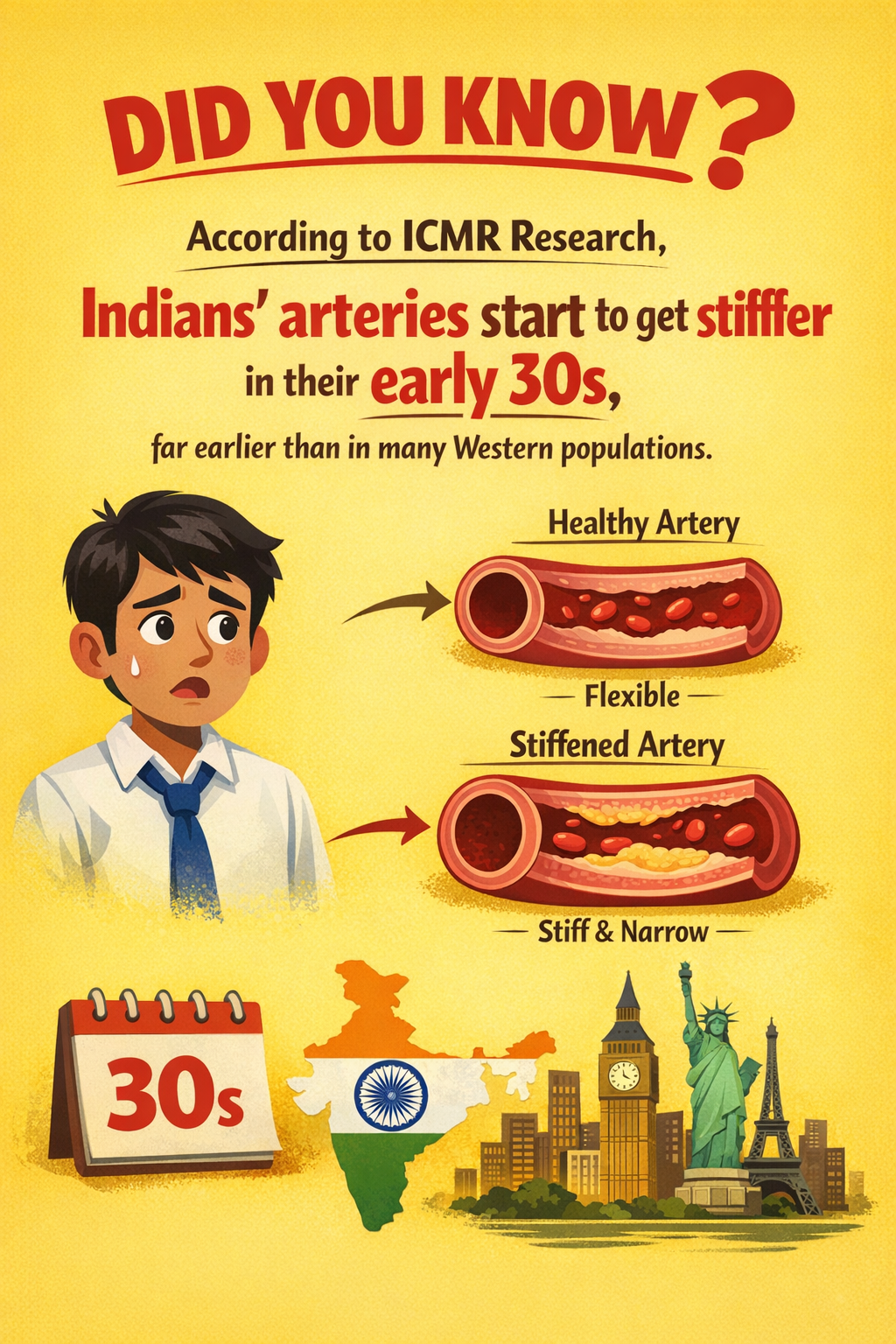
Step 4: Take a short stroll to lower the morning pressure increase.A 10 to 15-minute walk shortly after getting up can keep blood pressure steady for a few hours.Walking in the morning helps:
- Improved function of the endothelium (lining of the arteries)
- Less variation in blood pressure
- Better insulin sensitivity
The doctor added, "You don't need speed. You need a daily rhythm."Step 5: A meal that won't shock your arteriesNot eating breakfast or only eating refined carbs can make blood pressure and blood sugar levels go up and down even more.Recommended parts:
- Protein: nuts, eggs, curd, and legumes
- Oats, fruits, and seeds are high in fiber.
- Foods high in potassium: banana, spinach

Who should really care about this routine?
This method is very useful for:
- People who have borderline or diagnosed high blood pressure
- People whose family members have had a heart attack or stroke
- Professionals in cities who don't move around much
- Adults over 35
It works with medical treatment and doesn't take the place of prescription medicine.The long-term effect - this routine may help if you stick to it:
- Help keep blood pressure at a healthy level while you sleep
- Make arteries more flexible
- Slow down the aging of blood vessels
- Lower the risk of heart disease in the long term
The surgeon explained, "Arteries remember patterns. They don't forget neglect, and they reward discipline."The main point is that India's heart health crisis isn't just about hospitals and drugs.It's also about normal mornings that don't seem dangerous. Sometimes, keeping your heart safe doesn't mean doing more. It's about changing how you start your day before the damage starts.Medical experts consulted This article includes expert inputs shared with TOI Health by:Dr. Sameer Bhate, Head and Senior Consultant, Cardiovascular and Thoracic Surgery, Adult Cardiology, Amrita Hospital, FaridabadInputs were used to explain why morning routine is essential to lower blood pressure and improve artery health.








 English (US) ·