

 1 week ago
7
1 week ago
7
ARTICLE AD BOX
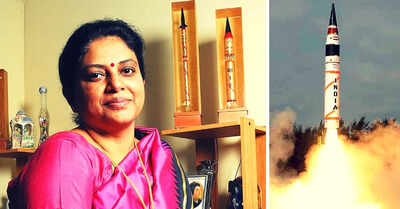
On the quiet coast of Kerala, where the Arabian Sea meets long stretches of coconut-lined land, a young girl once stood watching rockets being launched from a nearby space centre.
The thunderous roar of those launches left a lasting impression on her imagination. Years later, that same girl would grow up to lead some of India’s most critical missile programmes and earn the title widely known across the country: the “Missile Woman of India.” Her name is Tessy Thomas. Today, she is one of the most prominent scientists associated with India’s strategic defence programme, particularly the long-range Agni missile programme.
But her journey began far from laboratories and high-security research facilities, in a modest home where curiosity and determination shaped her future. Scroll down to read more.
Growing up near rockets and sea winds
Tessy Thomas was born in April 1963 in Alappuzha, a coastal town in Kerala. Her father was a small business owner, and the family valued education deeply despite limited resources. As a child, Thomas grew up not far from the Thumba Equatorial Rocket Launching Station in Thiruvananthapuram, one of India’s earliest space research facilities.
The sight of rockets launching into the sky fascinated her. Those moments sparked a quiet curiosity about how machines could travel so far and so fast.
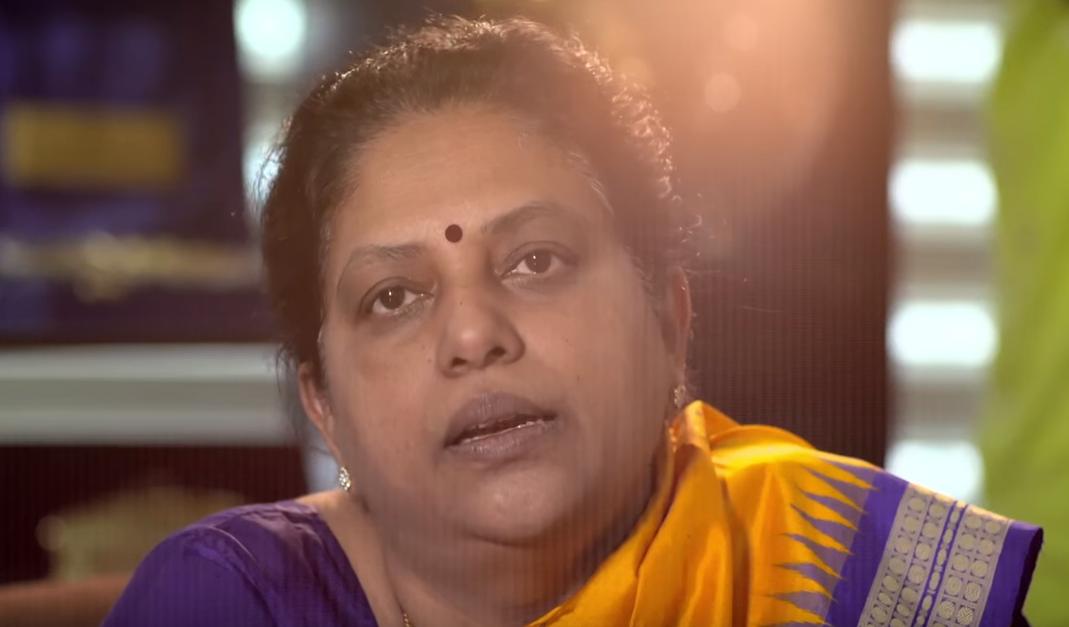
However, life also brought challenges early on. When Thomas was still young, her father suffered a stroke that left him partially paralysed. Watching her mother manage the household and support the family deeply influenced her sense of resilience and responsibility.
Despite these obstacles, Thomas remained focused on her studies, showing a strong aptitude for mathematics and physics.
A path shaped by science and determination
At a time when relatively few women pursued engineering in India, Thomas chose to study electrical engineering at the Government Engineering College Thrissur. Her interest in missile systems grew stronger during her academic years.She later specialised in guided missile technology through further studies at the Defence Institute of Armament Technology, now known as DIAT, where she deepened her understanding of missile guidance and control systems. Her career took a decisive turn in 1988 when she joined the Defence Research and Development Organisation (DRDO), India’s premier defence research body. At DRDO, she began working under the guidance of the legendary scientist A.
P. J. Abdul Kalam, who was then leading India’s missile development efforts. Kalam’s mentorship would play an important role in shaping her career and confidence in a highly specialised and demanding field.
Rising through India’s missile programme
Thomas gradually became deeply involved in the development of the Agni series of ballistic missiles, a key component of India’s strategic deterrence capabilities.
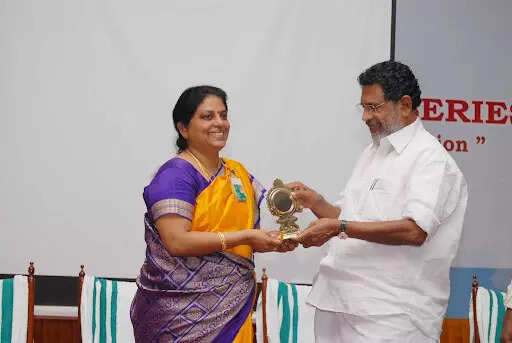
Over the years, she worked on multiple projects within the Agni missile programme, contributing to guidance systems, navigation technologies, and flight dynamics.Her most prominent role came when she became the project director for Agni-IV, a long-range missile capable of travelling more than 4,000 kilometres.Under her leadership, the missile was successfully tested in 2011, marking a major milestone for India’s strategic defence capabilities. The success established her as one of the key scientists behind India’s advanced missile systems.She later also played an important role in the development of Agni-V, one of India’s most powerful long-range ballistic missiles.
Because of her contributions to these programmes, the media and scientific community began referring to her as the “Missile Woman of India.”
Balancing science and family
Behind the highly technical work was also the story of a woman balancing intense professional demands with family life. Thomas is married to naval officer Saroj Kumar, and the couple has a son. In several interviews, she has spoken about how support from her family helped her manage long hours of research and project deadlines.
Missile testing often requires years of preparation and moments of intense pressure. A single launch can represent the work of thousands of scientists and engineers.For Thomas, those moments carried both responsibility and pride.
Breaking barriers for women in science
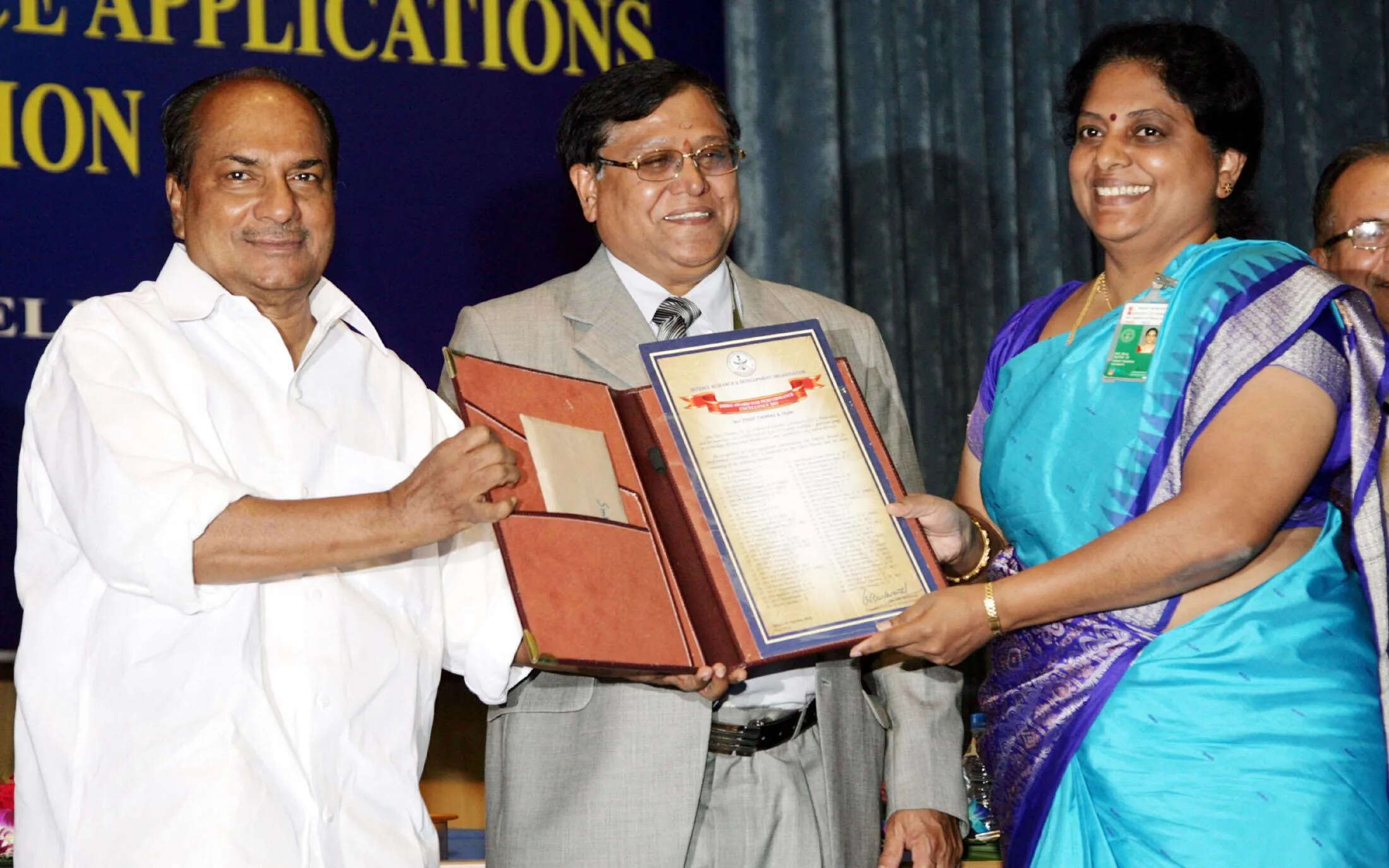
Historically, women were under-represented in fields like aerospace and defence technology. Thomas’s rise within DRDO challenged those norms and opened doors for future generations.
Over the years, she has received several honours, including the Lal Bahadur Shastri National Award for her contribution to missile technology.She also later served as director general of aeronautical systems at DRDO, continuing to oversee major defence research initiatives.
A story of curiosity turning into national achievement
Tessy Thomas’s journey reflects something simple yet powerful, the way childhood curiosity can evolve into a lifetime of achievement.
From a young girl watching rockets launch near Kerala’s coastline to leading critical missile programmes for the nation, her story is one of perseverance, intellect, and quiet determination.In a field defined by precision, technology, and national responsibility, she proved that passion for science knows no boundaries. And in doing so, Tessy Thomas not only helped shape India’s missile capabilities, but she also inspired countless young students, especially girls, to look at the sky and imagine what they might build next. Over time, focus begins to feel less like effort and more like stability. You respond instead of react.
You listen fully. You finish what you start. And perhaps most importantly, you rediscover something rare in today’s world: the ability to stay with a single moment long enough for clarity to return.





 English (US) ·