

 1 hour ago
5
1 hour ago
5
ARTICLE AD BOX
For at least three years, the Congress high command carefully balanced Siddaramaiah's role as the Karnataka Chief Minister and his deputy DK Shivakumar's aspirations. While DKS might have his CM dream fulfilled at last, the mighty Congress brass walks a risky path in asking Siddu to step aside. Here's why.
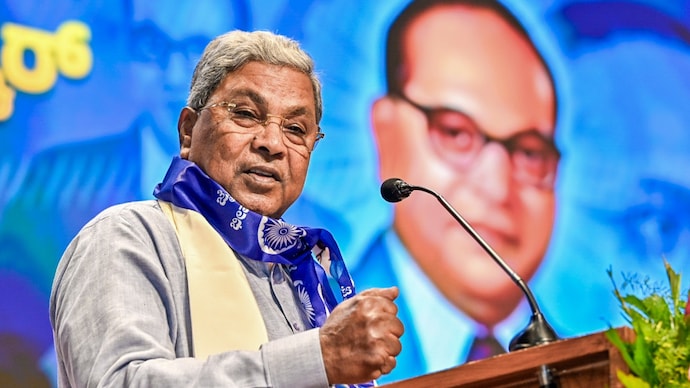
Karnataka’s longest-serving Chief Minister, Siddaramaiah, holds significant influence among backward communities, minorities and Dalits. (Image: PTI)
New Delhi,UPDATED: May 27, 2026 16:38 IST
For at least three years, the Congress high command walked a political tightrope in Karnataka, carefully balancing the ambitions of Chief Minister Siddaramaiah and the aspirations of his deputy, DK Shivakumar. Even on Tuesday, after a marathon meeting in New Delhi, Congress general secretary KC Venugopal publicly downplayed the discussions as related to Rajya Sabha seat distribution. But according to India Today TV's sources, the real message delivered to Siddaramaiah was far bigger. The Congress brass reportedly told Siddaramaiah that it was time to step aside and make way for Shivakumar as the CM.
The Congress brass also assured Siddaramaiah that he would not be sidelined as he steps down and would be offered a Rajya Sabha seat. The Congress leadership conveyed to Siddaramaiah that the party now needed him in Delhi as one of its most prominent OBC faces, particularly at a time when de facto chief Rahul Gandhi has aggressively sharpened the Congress's social justice and caste census pitch across the country.
The Congress leadership's caution explains why the longest serving CM of Karnataka, Siddaramaiah, is no ordinary regional leader and certainly no pushover, even for the mighty party brass in Delhi.
Few leaders in Karnataka command the kind of social coalition, grassroots reach, and political clout that Siddaramaiah has built over decades across backward classes, Dalits, and minorities.
The Congress also understands the political risks of sidelining a mass leader like Siddaramaiah. After his fallout with former Prime Minister HD Deve Gowda and exit from the Janata Dal (Secular), the party gradually lost much of its wider backward-class appeal and increasingly came to be seen as a largely Vokkaliga-centric regional party. The Congress wouldn't want to risk that.
The Congress leadership must also be mindful of the BJP's experience after the sidelining of BS Yediyurappa in 2021, which many in Karnataka politics believe weakened the BJP's connection with a section of Lingayat voters.
These political lessons might explain why the Congress high command handled Siddaramaiah with unusual caution for nearly three years despite persistent pressure from DK Shivakumar and his camp.
SIDDARAMAIAH'S AHINDA, WELFARE-DRIVEN POLITICS THAT MADE HIM A MASS LEADER
Siddaramaiah is widely regarded as the AHINDA leader in Karnataka. It is a social coalition of backward classes, minorities, and Dalits playing a central role. Siddaramaiah's commitment to the AHINDA plank became evident in 2005, when he organised a massive AHINDA convention in Hubballi while he was still in the JD(S). The move reportedly widened his differences with HD Deve Gowda, and eventually contributed to his expulsion from the party.
In 2006, Siddaramaiah joined the Congress, and he used the AHINDA framework to consolidate non-dominant caste groups and expand Congress's social base beyond its traditional support structure.
Siddaramaiah's pro-poor, welfare-driven governance model and emphasis on social justice became central to his politics. During his first term as Chief Minister, schemes under the "Bhagya" (welfare) umbrella helped him build a pro-people identity, while in his second term, the Congress's five guarantee schemes further strengthened his connection with economically weaker and backward communities.
Supporters of Congress see Siddaramaiah’s AHINDA politics as a counter to dominant-caste hegemony and the BJP's Hindutva-driven mobilisation. However, BJP leaders have often accused Siddaramaiah of pursuing caste-based appeasement politics. Yet electorally, the strategy has repeatedly helped the Congress remain competitive in Karnataka.
In the 2018 Assembly election, for instance, the Congress increased its vote share to around 38% despite losing seats in a highly polarised contest. Even today, Siddaramaiah's loyalists, reportedly numbering over 80 MLAs, are said to be keen on ensuring that the AHINDA bloc retains strong representation in any future leadership or potential cabinet restructuring within the Karnataka Congress.
Popular as Siddu, he commands the support of the majority of the 135 MLAs that the Congress has in Karnataka. Not just that, Siddaramaiah commands the loyalty of powerful community leaders.
HOW SIDDARAMAIAH SHAPED CONGRESS FOR NEARLY TWO DECADES
Siddaramaiah is widely regarded as the Congress's strongest OBC face in Karnataka and one of the party's most prominent backward-class leaders nationally. Over the years, the Congress high command, including Rahul Gandhi, has repeatedly relied on Siddaramaiah to strengthen the party's outreach among backward classes, minorities, and Dalits.
Siddaramaiah's stature within the party is not limited to Karnataka alone, but also tied to the Congress's broader attempt to position itself as a party that works for social justice nationally.
When Siddaramaiah joined the Congress, he brought with him significant backward-class support and gradually emerged as the party's tallest mass leader in Karnataka. He served as the Leader of the Opposition and later as the Congress's chief ministerial face, and during these periods, Siddaramaiah played a key role in rebuilding the Congress's organisation in Karnataka.
The Congress high command backed him as CM in both 2013 and 2023, seeing him as the leader best placed to consolidate anti-BJP votes across caste and regional lines.
These are precisely the reasons why, even if Siddaramaiah eventually steps aside from the chief minister's chair, the Congress cannot afford to politically sideline him. Unlike many regional leaders who faded after losing office, Siddaramaiah still holds command of a loyal social coalition that could influence the Congress's future politics.
The Congress might hand over administrative control to Shivakumar, but Siddaramaiah's political relevance is likely to continue far beyond Bengaluru, both within Karnataka and in the Congress's broader national social justice narrative.
In many ways, the Congress appears determined to avoid repeating what happened to the BJP after the gradual sidelining of BS Yediyurappa. The party knows that weakening a mass leader with a deep support base can come at a long-term political cost. And that explains why Siddaramaiah remains one of the few regional leaders whom even the Congress brass handles with extraordinary caution.
- Ends
Published By:
Avinash Kateel
Published On:
May 27, 2026 16:38 IST




 English (US) ·