

 6 days ago
6
6 days ago
6
ARTICLE AD BOX
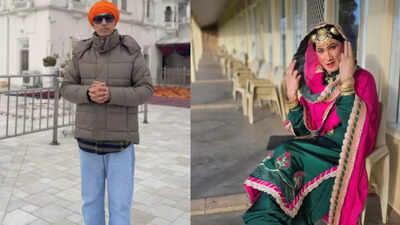
He was born as Zorawar Singh in Punjab’s conservative Chari village in the Fatehgarh Sahib district. Today, in his late 50s, he has achieved what once seemed unthinkable. He is the founder of an immensely popular Giddha troupe made up of gender-fluid artists -a group that performs a dance traditionally reserved for women and is now among the most sought-after Giddha ensembles across India.However, when Zorawar Singh initially started performing Giddha professionally three decades ago, the journey was far from straightforward. Men were not expected to wear women’s attire, let alone perform a dance associated with femininity.“My father was in the army and my mother was a homemaker. "My father was a man much ahead of his time, he may not have openly encouraged me, but he never created any hurdles and in a way was silently supporting me," says Zorawar Singh.Giddha is a dance that celebrates femininity. It is traditionally performed by women at weddings and festivals. The beauty of the dance lies in its beautiful, colourful costumes made with shimmering fabric and golden laces, vibrant salwar kameez, dupattas, intricate embroidery, and artistic parandas woven into braided hair. The performance combines rhythmic clapping, expressive singing, and energetic footwork.
In Punjabi culture, it embodies strength, resilience, and the emotional expressiveness of women.
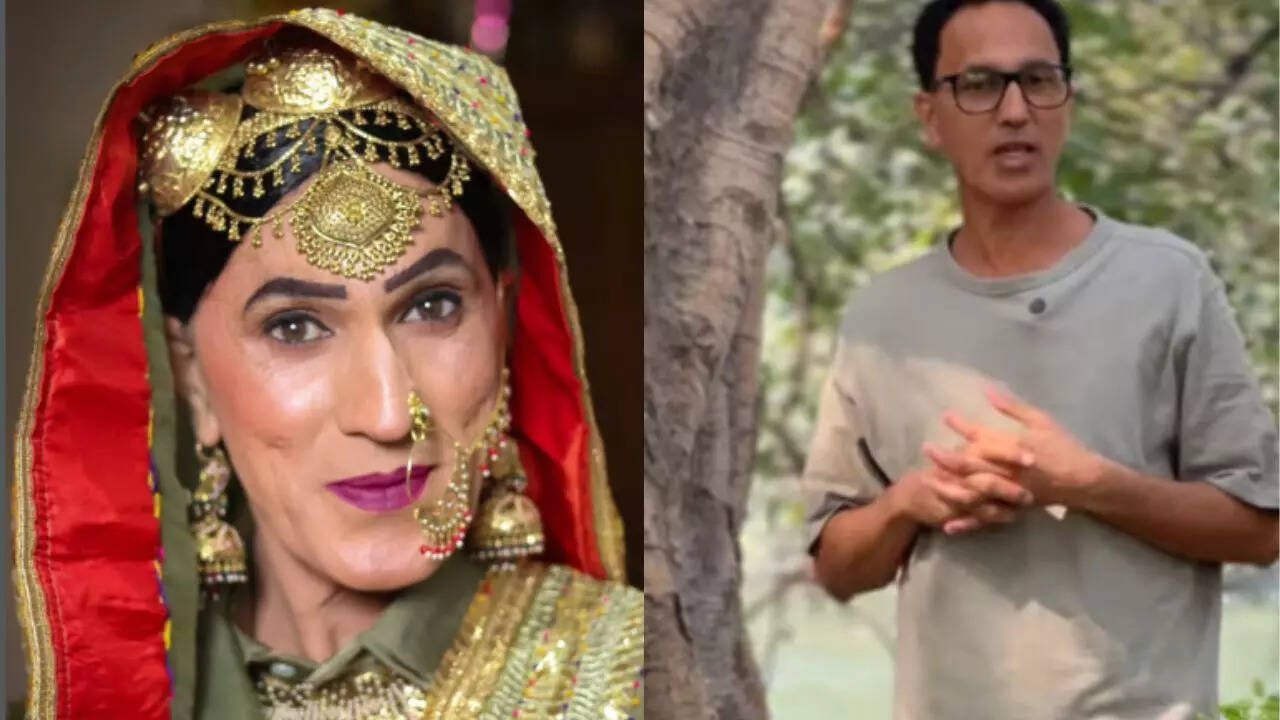
“As I was growing up, I fell in love with Giddha,” Zora recalls. “I loved the dance so much that I would sneak out to watch it at weddings in the region, and sometimes I even participated.” While his family did not stop him, villagers often reminded him that this dance was “not meant for boys.”But his love for the dance kept growing. Noor Zora recalls that it was in his late thirties that he gradually began to think of performing Giddha openly and professionally. He made the bold decision to attend a friend’s traditional Indian wedding dressed in a colourful salwar kameez, adorned with sequins and beads. He shaved and dressed up as a woman and performed Giddha! And after this there was no looking back.Why did he choose the name Noor Zora? "The name combines my own name, Zorawar, and Noor from the name of Noor Jehan, the legendary Punjabi singer of the 1940s and 1950s."He made a small group of dancers, and work gradually started pouring in. Around 2010, he created a social media account in the name Noor Zora and was surprised at the response. Today, he has around 405K followers on Instagram.In 2015 he founded the Lok Rang Noor Art troupe which has around 40 queer individuals, most assigned male at birth but who no longer identify as male. While many are Punjabi, others from across India have connected with Zora online, drawn by the possibility that dance could bring them dignity, visibility, and social recognition.
The popularity of Lok Rang Noor Art is growing by the day. They are in high demand at weddings, anniversaries, festivals, and birthdays across India, the US, Canada, and the UK. They perform in traditional attire, wearing tikkas and parandas, often without instruments—relying instead on breath, stamping, clapping, and folk poetry.Their performances breathe new life into a dance long defined as “women’s art.” Beyond entertainment, the troupe also supports social causes, including women’s rights and gender equalityNoor Zora is a government schoolteacher in Punjab and is pursuing a PhD in folklore.
Alongside his academic life, he continues to perform Giddha with the troupe he founded.In the heart of Punjab, where tradition runs deep, Noor Zora has not only claimed space for himself but has reshaped the boundaries of a cultural art form-proving that sometimes, what is considered impossible simply requires someone brave enough to begin.



 English (US) ·