

 1 week ago
8
1 week ago
8
ARTICLE AD BOX
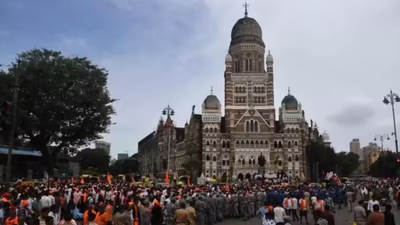
MUMBAI: It will be interesting to watch the contest in the lone electoral ward of the R South administrative division that was earlier held by the Congress but later slipped into the hands of the Shiv Sena following the disqualification of the sitting corporator over his caste certificate.
Now reserved for women, the ward has turned into a battle between families, with the Congress fielding Ajanta Yadav, wife of former corporator Rajpati Yadav, against Vrushali Hundare, daughter of Shiv Sena (deputy CM Eknath Shinde’s party) ex-corporator Eknath Hundare, as both parties attempt to reclaim the seat.In the saffron-dominated division, the Shiv Sena (UBT) is aiming to retain its two seats by once again fielding candidates from families that have historically won here.
The BJP, meanwhile, has reshuffled its slate -- replacing five of its 10 candidates while retaining the remaining five or their family members -- in a bid to maintain its dominance.
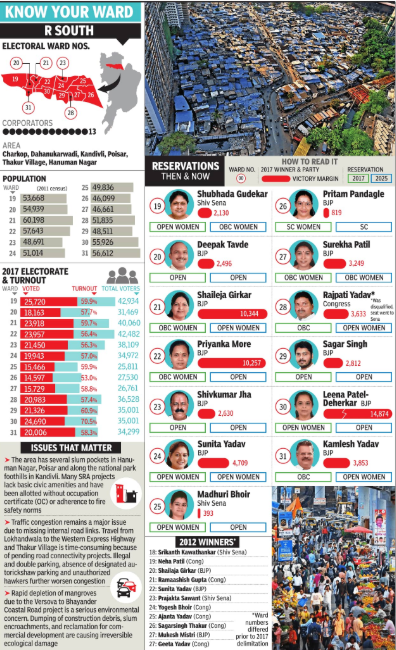
Rajpati Yadav had won Ward No. 28 in the 2017 elections but was later disqualified over issues related to his caste certificate. Following his removal, Eknath Hundare, who had secured the second-highest number of votes, was declared the winner.
With the seat now reserved for women, Ajanta Yadav is contesting on a Congress ticket, while Vrushali Hundare has been fielded by the Eknath Shinde-led Shiv Sena. Adding another dimension to the contest, the Shiv Sena (UBT) has also nominated a candidate from the ward, a move that could split the Sena vote and potentially benefit Ajanta Yadav.Another keenly watched contest is unfolding in Ward No. 25, which includes Thakur Village, Samta Nagar and Janupada.
BJP candidate Nisha Parulekar-Bangera had narrowly lost to Shiv Sena (UBT)’s Madhuri Bhoir by fewer than 400 votes in the 2017 elections. This time, Sena (UBT) has opted for a cautious strategy by fielding Yogesh Bhoir, Madhuri Bhoir’s husband and a former corporator elected in 2012. The Mahayuti alliance has retained Parulekar as its candidate, despite both BJP’s Devang Dave and Shinde-led Shiv Sena’s Shekhar Shere vying for the ticket -- underscoring internal friction within the alliance.Party insiders pointed out that Parulekar, also the only actor contesting the BMC elections this time, had lost in 2017 despite BJP dominance in the ward’s high-rise pockets, and added that she is not a local resident. Dave, who has long been associated with the party’s election management, issued a public statement announcing his decision not to contest, saying hewas respecting the party’s call despite the “pain and disappointment” felt by many supporters.Despite north Mumbai largely remaining a saffron stronghold, Mumbai Congress spokesperson Sureshchandra Rajhans expressed confidence that the party would win at least 12 of the more than 30 seats across three administrative divisions. Contesting for the first time from Ward No. 26, Rajhans is pitted against BJP’s Pritam Pandagale. He claimed that strong anti-incumbency sentiment on the ground would work in his favour.The R South ward is among Mumbai’s suburbanpockets witnessing rapid real estate growth, with high-rise buildings coming up in areas far from railway stations. This accelerated expansion, coupled with high population density, has placed enormous strain on infrastructure that has failed to keep pace. The effects are evident in worsening traffic congestion and shrinking roads struggling to meet rising demand.
While rail and metro connectivity has expanded, last-mile connectivity remains a major concern.Several slum pockets and rehabilitation buildings continue to face challenges in accessing basic amenities, including adequate water supply, according to local politicians from both the ruling party and the opposition. The region is expanding not only vertically but also horizontally, with population growth driven by encroachments near the Sanjay Gandhi National Park and the development of large private land parcels.Highlighting the uneven distribution of resources, Charkop MLA Yogesh Sagar said newer private buildings, slum rehabilitation and cluster redevelopment projects are being granted higher FSI, but infrastructure upgrade has lagged. “Uneven waterdistribution remains a chronic problem in these suburban areas, as the BMC has not increased water supply in proportion to the growing population,” he said, adding that many rehabilitation buildings lack fire compliance and are occupied without occupancy certificates.Several of these newly developed pockets lie nearly three kilometres from railway stations or the Western Express Highway, placing further pressure on existing infrastructure. During peak hours, commuting remains a challenge due to traffic congestion and a shortage of autos and BEST buses.






 English (US) ·