

 1 hour ago
4
1 hour ago
4
ARTICLE AD BOX
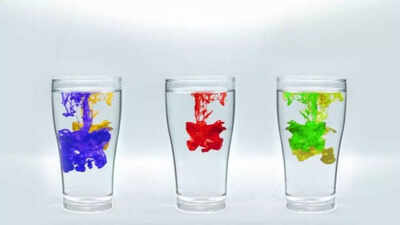
It’s a question so simple, yet it piques the interest and curiosity the moment we put ourselves in a thinking posture and ask: What is the colour of water? We learn from childhood textbooks and from observing around us that water actually has no colour.
And yet, as we observe our surroundings in the form of oceans, rivers, and even swimming pools, we find water can be blue and green in colour. There’s actually a scientific basis for why water appears colourless and why it appears so colourful sometimes, and we shall examine why in this article.Water is naturally colourlessWater in its pure form is actually colourless. This is the reason that a certain amount of water in a glass appears clear to our eyes.
This is because the water in a glass is transparent enough to allow the passage of light. This occurs as a certain amount of water does not absorb the visible colours of light. This water will appear colourless to the eyes unless a certain amount of something is added to it.Why large water bodies appear to be blueWhy do oceans and seas appear blue? This is due to the way in which water absorbs different colours from the sun.
Sunlight, upon entering water, has colours such as red, orange, and yellow absorbed by water, but blue light travels a certain distance and is reflected back to our eyes. This is why open oceans appear to be deep blue.
Role of reflection of the skyIt is also believed that this is why water appears blue because it simply reflects the colour of the sky, which indeed is true, but is also a secondary reason. Just because calm surfaces reflect the colour of the sky in its true form, even on a cloudy day, it is clear that light absorption in water is an equally prominent reason.Why some water may appear Green or BrownRivers, lakes, and ocean water can be seen as green or brown because of the particles present in the water, vegetation, and sediment. Algae and microscopic organisms reflect light in different ways, depending on how light interacts with what is in the water. Mud, sand, and pollutants in the water are other influences on colour.Why swimming pools look blueSwimming pools appear blue due to depth and the reflection of light in the water, as well as the tiles lining the pools.
The blue colour in the water is always reflected to produce the bright blue appearance of the swimming pool water, despite the water being colourless.
Why ice & snow are whiteWhen the water turns into ice or snow, it appears white instead of clear. This is because the light scatters in many directions when it hits the air bubbles in the ice. Instead of passing through without any hindrance, the light is reflected in many directions, making the ice appear white.
Nothing has changed with the water. Light is the only thing that has changed.Can water ever have a colour?Water, when colourless, can be regarded as tinted in some situations. Water with a high thickness will appear with a hint of blue because of the way it responds to light. In other cases, organic and mineral contents in water can make it appear with various colours, which in fact do not belong to water but to what it contains and reflects.The simple answer to a curious question. Now, what is the colour of water?Water is colourless. However, water may look blue, green, brown, or white.









 English (US) ·