

 1 hour ago
3
1 hour ago
3
ARTICLE AD BOX
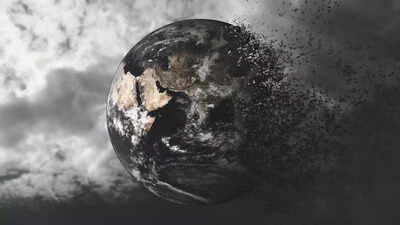
Occasionally, an article from the 1960s will resurface with the claim that mathematics once predicted the exact date of the world's end. This theme is the stuff of science fiction stories, but the original article itself stemmed from academic work and an understanding and fear concerning the world's imminent course in this time of rapid global change.
Rather than forecasting destruction through war or natural disaster, the study focused on something far more ordinary and far more powerful: population growth.The equation was developed in 1960 by Heinz von Foerster, Patricia M. Mora, and Lawrence W. Amiot at the University of Illinois. Their research examined global population trends across nearly two thousand years of recorded history. When the data was plotted, it revealed a striking pattern.
Population growth was accelerating at an ever-increasing rate rather than growing steadily. This observation raised serious questions.
If population growth continued to speed up indefinitely, what would eventually stop it?
How rapid population growth raised fears about the future
At the time of the study, the world was emerging from two devastating world wars. Despite a massive loss of life, the global population had risen sharply. Between 1900 and 1960 alone, it increased from roughly 1.6 billion to about three billion people.
Advances in medicine, sanitation, and agriculture had dramatically reduced death rates. However, birth rates remained high in many regions. To researchers, this imbalance appeared unsustainable in the long term. Using historical data, the researchers created a mathematical formula that extended the population curve into the future. The model study by Science AAS, suggested that population growth would mathematically reach infinity on Friday, 13 November 2026.This was never meant to be taken literally. An infinite population is physically impossible. The date was used as a symbolic point where the existing growth pattern would have to break down. In essence, the equation was signalling that something would have to change before reaching that point.
What the researchers believed would actually happen
The scientists did not predict an apocalyptic event. Instead, they warned that extreme population density could reduce the chances of survival for individuals.
They argued that humanity might face severe pressure from overcrowding, resource depletion, and environmental strain.Their conclusion was bleak but measured. Humanity would not necessarily starve, they wrote, but could be crushed by the limits of its own environment if growth remained unchecked.More than six decades later, the assumptions behind the equation no longer hold. While the global population has grown to over eight billion, its growth rate has slowed considerably.
In many parts of the world, people are choosing to have fewer children due to social, economic, and educational changes.According to United Nations projections, the global population is expected to peak in the 2080s before beginning a gradual decline. This shift fundamentally alters the trajectory that the original model depended upon.
Modern scientific view of Earth’s long-term future
If humanity is searching for a scientifically grounded estimate of when life on Earth might truly end, modern research offers a far more distant timeline. Scientists from Toho University in Japan, working alongside NASA researchers, have studied the future evolution of the Sun and Earth’s atmosphere.Their simulations suggest that in around one billion years, increasing solar radiation will strip oxygen from the atmosphere, evaporate the oceans, and raise surface temperatures beyond the limits of life.







 English (US) ·