

 1 day ago
7
1 day ago
7
ARTICLE AD BOX
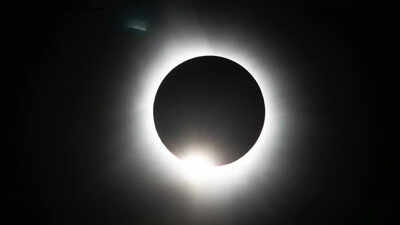
People often remember where they were for an eclipse, even years later. It is not always because they understood what was happening, but because the light changed and the world felt briefly unfamiliar.
On August 2, 2027, a total solar eclipse will cross a long stretch of the Earth, moving quietly from the Atlantic across parts of Europe, North Africa and the Middle East before fading over the Indian Ocean. For many places, it will be the most complete eclipse seen in a lifetime. The Moon will pass directly in front of the Sun, and for a few minutes, daylight will soften into something closer to dusk. It is an event spoken about in facts and timings but often experienced in silence.
The Eclipse of the Decade: Where will it be visible in 2027
According to the National Solar Observatory, the path of totality will touch several countries and seas, cutting a narrow line across the globe. It will pass over Spain, including Cádiz, and skim Gibraltar before reaching Morocco and Algeria. From there, it continues across Tunisia and Libya, where Benghazi lies directly beneath the path. Egypt will see some of the longest viewing times, especially near Luxor, before the eclipse moves on to Saudi Arabia, Yemen and Somalia.
Parts of both the Atlantic and Indian oceans will also fall under totality. Outside this narrow path, many regions will still see a partial eclipse, though the full darkness and dramatic shift in the sky only occur within the central track.
Six minutes without the sun: What makes the 2027 solar eclipse so unusual
Not all total solar eclipses are equal in length. The August 2027 event stands out because of its duration. Near Luxor, totality will last for 6 minutes and 22 seconds, making it the second-longest total solar eclipse of the 21st century.
Only the 2009 eclipse lasted longer. This extended darkness happens because of a careful balance between the Moon’s distance from Earth and Earth’s position relative to the Sun. The result is more time to observe subtle details that are usually rushed.
The light fades slowly. The return of the sun feels delayed. For scientists and casual observers alike, that extra time matters.
What actually happens during a total solar eclipse
A total solar eclipse occurs when the Moon lines up perfectly between Earth and the Sun, blocking the Sun’s bright surface from view.
For a short period, the sky darkens as if evening has arrived early. Temperatures may dip slightly. Birds sometimes fall quiet, and stars and planets become visible in the middle of the day. Most striking is the Sun’s corona, its outer atmosphere, which glows faintly around the Moon’s edge.
This part of the Sun is normally hidden by glare. During totality, it becomes visible without instruments, delicate and uneven, changing shape from one eclipse to the next.
Safety precautions to watch the eclipse
Looking at the Sun is dangerous at all times except during the brief moment of totality, when the Moon fully covers it. Before and after that phase, proper eye protection is essential. Special eclipse glasses or handheld solar viewers are the only safe options for direct viewing. Ordinary sunglasses, no matter how dark, are not safe, nor are homemade filters. Safety advice can sound repetitive, but it matters. A total eclipse invites curiosity and instinctive looking.
Those few minutes are rare, but eyesight lasts longer. When the sun returns, it does so suddenly it might damage the eyes.






 English (US) ·