

 1 week ago
6
1 week ago
6
ARTICLE AD BOX
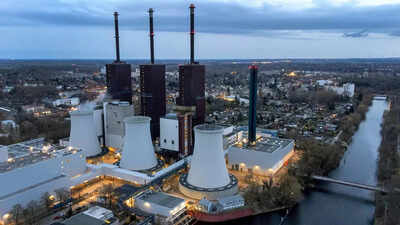
A militant group named the Vulkangruppe has claimed responsibility for an arson attack that disrupted power to tens of thousands of homes and businesses in Germany. In a 2,500-word protest letter, the group stated the act was a protest against the climate crisis and the role of artificial intelligence (AI).
The attack, which occurred last week on a bridge crossing the Teltow canal, damaged high-voltage cables near the Lichterfelde heat and power station in Berlin. Stromnetz Berlin, the city's grid operator, reported that 35,000 households and 1,900 businesses may be without electricity and heat until January 8. According to a report by The Guardian, the group wrote that they specifically chose to target "some of the city’s wealthiest districts." German state security authorities have opened an investigation into the incident. The Vulkangruppe's letter links their actions to broader concerns about digital infrastructure and environmental impact.
What the far-left group Vulkangruppe said about the arson attack on its protest letter
In a 2,500-word letter seen by the Guardian that police called "credible", the group said it wanted to "cut the juice to the ruling class".It criticised a "greed for energy" made from dirty fossil fuels, calling the attack "action in the public interest" and an "act of self-defence and international solidarity with all those who protect the earth and life".In the letter, which included details about the fire, Vulkangruppe said that data centres used for AI were worsening the problem of climate-harming energy use while posing dangers to society.
“We are contributing to our own surveillance, and it is comprehensive. The tech corporations are in the hands of men with power, which we give them. One day we will simply sit before bright screens or dead machines while dying ourselves of thirst and hunger,” the group noted.The group also added that it was sorry for poorer people who lost power because of the attack but claimed that it had less sympathy "for the many villa owners" now in the dark.The area that lost power includes many nursing homes and hospitals, as well as tall buildings with people who need elevators that are now out of service. Berlin had some snow over the weekend, and temperatures dropped well below freezing at night.Berlin's mayor, Kai Wegner, said that he believed the massive blackout was done for political reasons, while security experts said it looked like a previous far-left attack.“It is unacceptable that left-wing extremists are once again openly attacking our electricity grid and thereby endangering human lives,” Wegner told reporters during a visit to an emergency shelter for those without heat and hot water.With cell phone networks down, police used loudspeakers on their cars to tell people what was happening as they helped those who needed care. Several local train lines stopped running, and many students who were supposed to return to school this week may see their break extended into next week.A previous arson attack blamed on the far left in September 2025 knocked out power for 60 hours in the southeast part of the city in what was reportedly Berlin's most extended power cut since World War II.Early guesses for the weekend blackout had included possible Russian sabotage, as Germany has been closely watching for attacks on its infrastructure by other countries.In March 2024, Vulkangruppe claimed an arson attack against a power tower at the Tesla gigafactory outside Berlin that cut off electricity to the plant and temporarily stopped production.In its 2024 annual security report, Germany's domestic intelligence watchdog mentioned repeated attacks on the local power grid by Vulkangruppe, which it labels as a left-wing extremist group.It said the group, believed to be about 14 years old, chose targets for their "palpable effects on the population", intending to cause destruction requiring painstaking and lengthy repairs with little concern for collateral damage.Stromnetz Berlin said that at first, 45,000 homes and 2,200 businesses in the districts of Nikolassee, Zehlendorf, Wannsee and Lichterfelde lost power starting last week. A day later, the company said on its website that about 10,000 homes and 300 businesses in Lichterfelde had had their electricity restored.But cold weather was making it harder to lay new underground cables, meaning the remaining homes may have to wait until later this week to get their lights and heat back on."Our teams are on the ground and we are working flat out to restore supplies," Stromnetz Berlin noted.Experts said attacks on energy infrastructure required little specialist knowledge to have a significant impact, with maps showing key parts of the power grid widely available online and few backup plans ready to use in the event of sabotage.





 English (US) ·