

 1 hour ago
3
1 hour ago
3
ARTICLE AD BOX
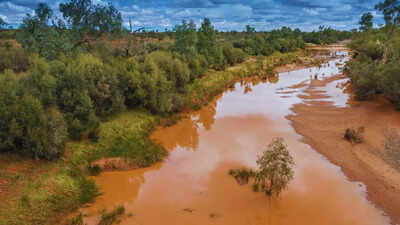
Finke River after the rains
In the parched inland of Australia, there is a river that defies the conventions of rivers. Most of the year, it looks as if it is just sand and waterholes, with no water. However, according to geologists, this is one of the most remarkable rivers in the world.
The Finke River, in the Northern Territory of Australia, is said to be the world’s oldest river, measuring 300 to 400 million years. While the title of “oldest river” is debated among scientists, Finke's geological history makes it one of the most ancient continuously existing river systems known.
Where the Finke River flows
The Finke River originates in the MacDonnell Ranges, west of Alice Springs, and winds its way south-eastward across central Australia before fading into the desert sands of the Simpson Desert.
In contrast to most ordinary rivers, which are permanent and flow all year round, Finke River is an ephemeral one and flows only after rainfall. Despite its apparent dry existence over long periods of time, Finke River is an important natural aspect of central Australia.Among the most breathtaking parts of this watercourse is the Palm Valley, where the Finke River slices through ancient sandstone ranges, forming bluffing cliifs and crevices.
Such a landscape not only has aesthetic appeal but is one of the factors that make a case for the age of this ancient watercourse.
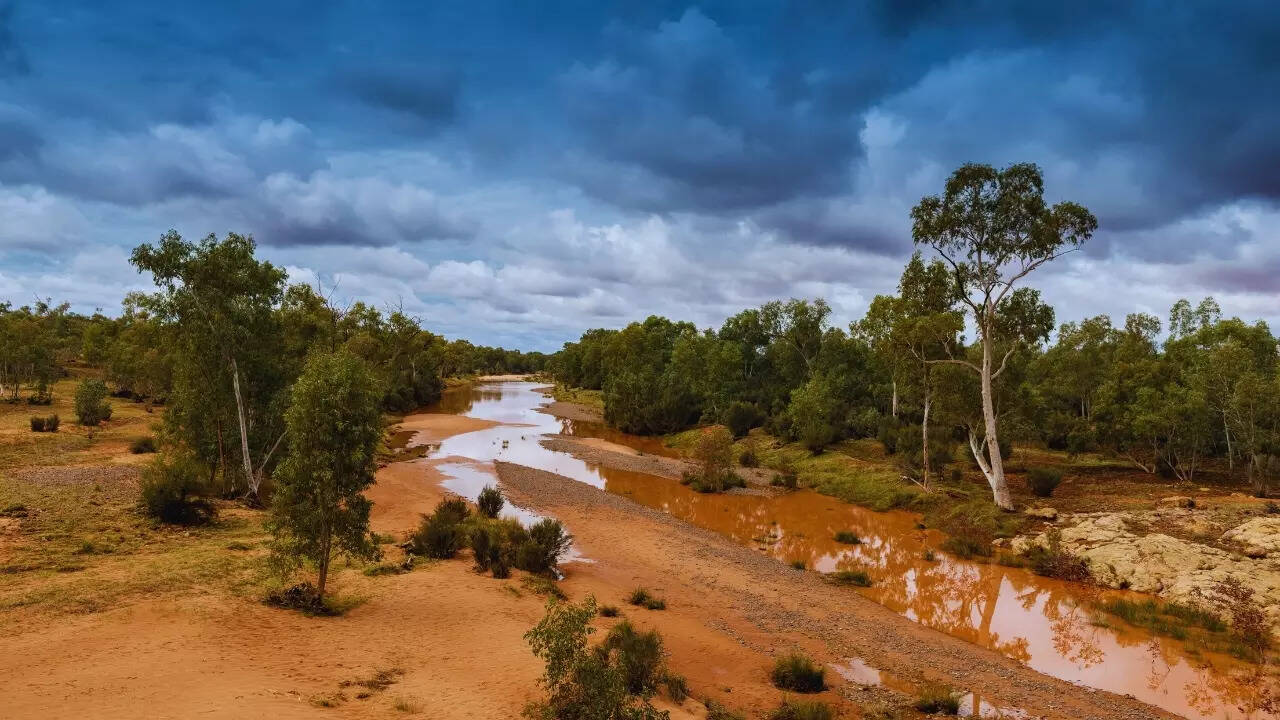
Finke River in Australia
A river older than dinosaurs
To put the age of the Finke River into perspective, a river that began flowing 300–400 million years ago would have existed long before dinosaurs appeared, which was around 230 million years ago. The Finke would have already been carving its path when Australia was part of the supercontinent Gondwana, alongside Antarctica, Africa, and India.Over hundreds of millions of years, the river has survived continental drift, climate shifts, mass extinctions, and the gradual drying of central Australia. What was once a landscape with far more abundant water slowly transformed into the desert environment seen today.
Cultural significance for indigenous Australians
The Finke River is not only ancient in geological terms; it is also deeply significant to the Western Arrernte people, the Traditional Custodians of the land through which the river flows.
Known locally as Larapinta, the river features prominently in Aboriginal Dreaming stories, songlines, and cultural traditions.For tens of thousands of years, Indigenous communities have relied on the river’s waterholes for survival, navigation, and ceremony. In this sense, while the river’s geological age spans hundreds of millions of years, its human history stretches back tens of millennia, making it a living connection between Earth’s deep past and present-day culture.
Is this truly the oldest river?
The claim that the Finke River is 300–400 million years old is rooted in geology, not folklore. Geological evidence suggests that the course of the Finke River predates the uplift of the MacDonnell Ranges, which formed around 300 million years ago during a major mountain-building period.Most rivers form after mountain ranges rise, flowing downhill along newly created slopes. The Finke River appears to be different.
It is believed to be an antecedent river, meaning it was already flowing across a relatively flat landscape before the mountains formed. As the land slowly uplifted over millions of years, the river maintained its course, cutting downward into the rising rock and carving deep gorges rather than being diverted around the mountains.This process explains why the Finke flows through the MacDonnell Ranges instead of around them, a strong indicator of great antiquity.While the Finke River is frequently referred to as the oldest river in the world, scientists tend to be cautious with absolute claims. Other rivers, such as parts of the Nile, Indus, and New River in the United States, are also considered extremely ancient. What makes the Finke unique is the strength of evidence suggesting that its current course has remained largely unchanged for hundreds of millions of years.
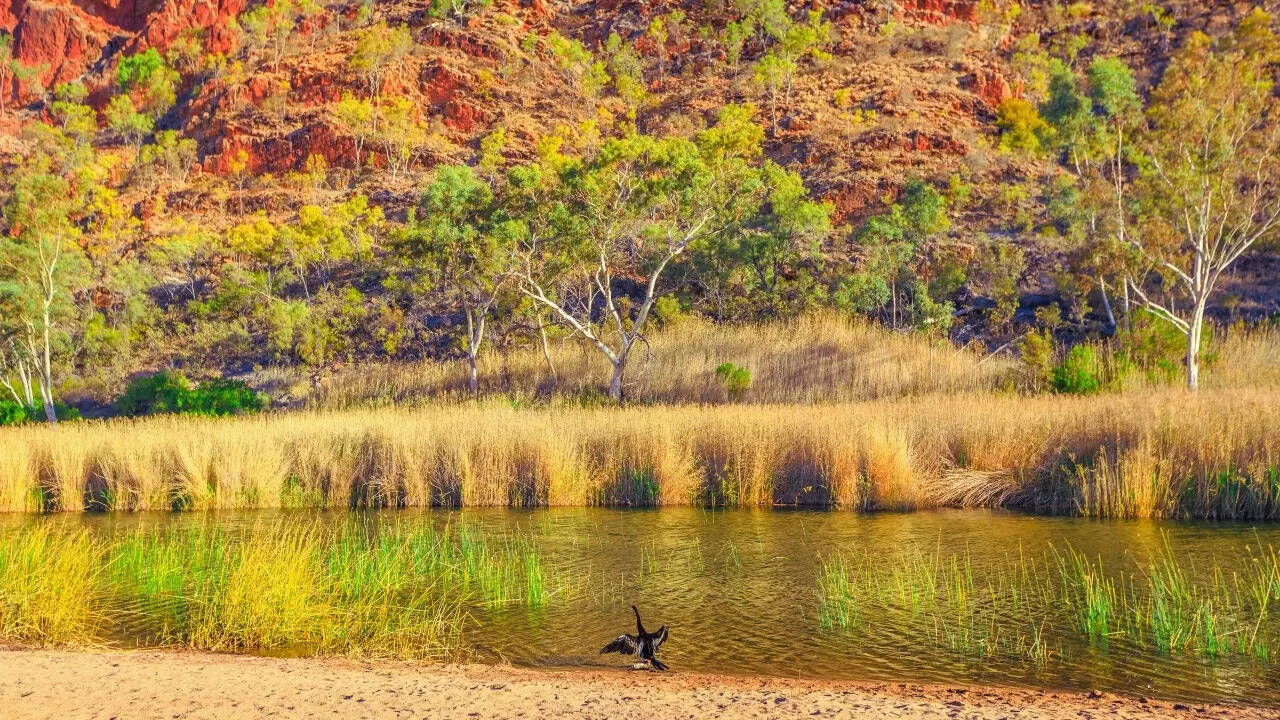
Finke River
Life along an ancient river
Despite its arid surroundings, the Finke River supports pockets of life that would not otherwise survive in the desert.
Permanent waterholes left behind after floods become crucial refuges for birds, reptiles, insects, and mammals.Perhaps the most famous biological feature associated with the river is Palm Valley, home to the Red Cabbage Palm. These palms are found hundreds of kilometres from their nearest relatives, raising long-standing questions about how they came to exist there. Some researchers believe they are remnants of a much wetter climate, preserved in the sheltered microenvironment created by the river gorge.
A river that challenges our definition of rivers
The Finke River forces us to rethink what a river really is. Unlike most famous rivers, which flow constantly, the Finke can lie dry for years-only to burst its banks suddenly after some distant desert downpour. Yet its gorge, hewn out of solid rock, holds secrets from a time long, long before most landscapes on Earth were even born.Its existence shows that a river does not need constant surface flow to be geologically significant.
The land remembers where water once moved, and continues to move, even when the desert temporarily claims the surface.In a world facing climate change and water resource challenges, it can be said that the Finke River reminds people of the resilience and transformation of the Earth through the centuries. It has managed to persevere through significant changes in the environment that span beyond human time, despite its current threats through land degradation and tourism.More than simply trying to preserve an individual river, it is an attempt to preserve landscapes that provide some of the strongest evidence of time on Earth. Quiet and dusty and often forgotten», the Finke River remains an entity that demonstrates the greatest stories of the Earth’s history may not always lie in the water.








 English (US) ·