

 8 hours ago
4
8 hours ago
4
ARTICLE AD BOX

Girl holding a homemade water tester, observing the color change with focused determination| Image Credit: TIL Creatives
A simple glass of tap water can look perfectly safe while carrying a dangerous contaminant. Lead, which can enter drinking water through ageing pipes, solder, fixtures, and service lines, often cannot be detected through taste, smell, or appearance.
According to the US Centers for Disease Control and Prevention (CDC), no safe blood lead level in children has been identified, with children remaining especially vulnerable to the harmful effects of lead exposure. Against that backdrop, one American teenager decided to turn concern into invention.In 2017, a young 11-year-old named Gitanjali Rao invented a machine capable of detecting the presence of lead in water due to being inspired by the issue of drinking contaminated water in Flint, Michigan, in the United States.
This project, initially meant to be done for a school project, soon became famous for youth innovations in health.The danger hidden in ordinary waterAccording to the CDC, sources that may cause lead exposure include water conveyed by pipes and plumbing material containing lead. The CDC further indicates that there is no safe level of lead exposure among children because any low level of exposure results in developmental effects and behavioural issues.
Public health concerns have grown on a national scale in the wake of the Flint water scandal, where it was revealed that the poor handling of water could put an entire community in jeopardy.A young inventor responds to a national crisisAccording to the United States Patent and Trademark Office, Rao’s idea was triggered by her research on the Flint incident. It is noted in this case that Rao created a device aimed at detecting lead in drinking water, after which she won the Discovery Education 3M Young Scientist Challenge in 2017.The importance of the story comes not only with respect to the young scientist's age, but also in connection with the practicality of the problem under consideration. Discussions related to pollution usually revolve around policy errors or aging infrastructure, while the approach taken by Rao took into account the fact that people want immediate results.This invention caught everyone's eye due to the transformation of a complicated matter into a simple one.
Water testing no longer seemed like something difficult and inaccessible, but an easy task that can be done by many.
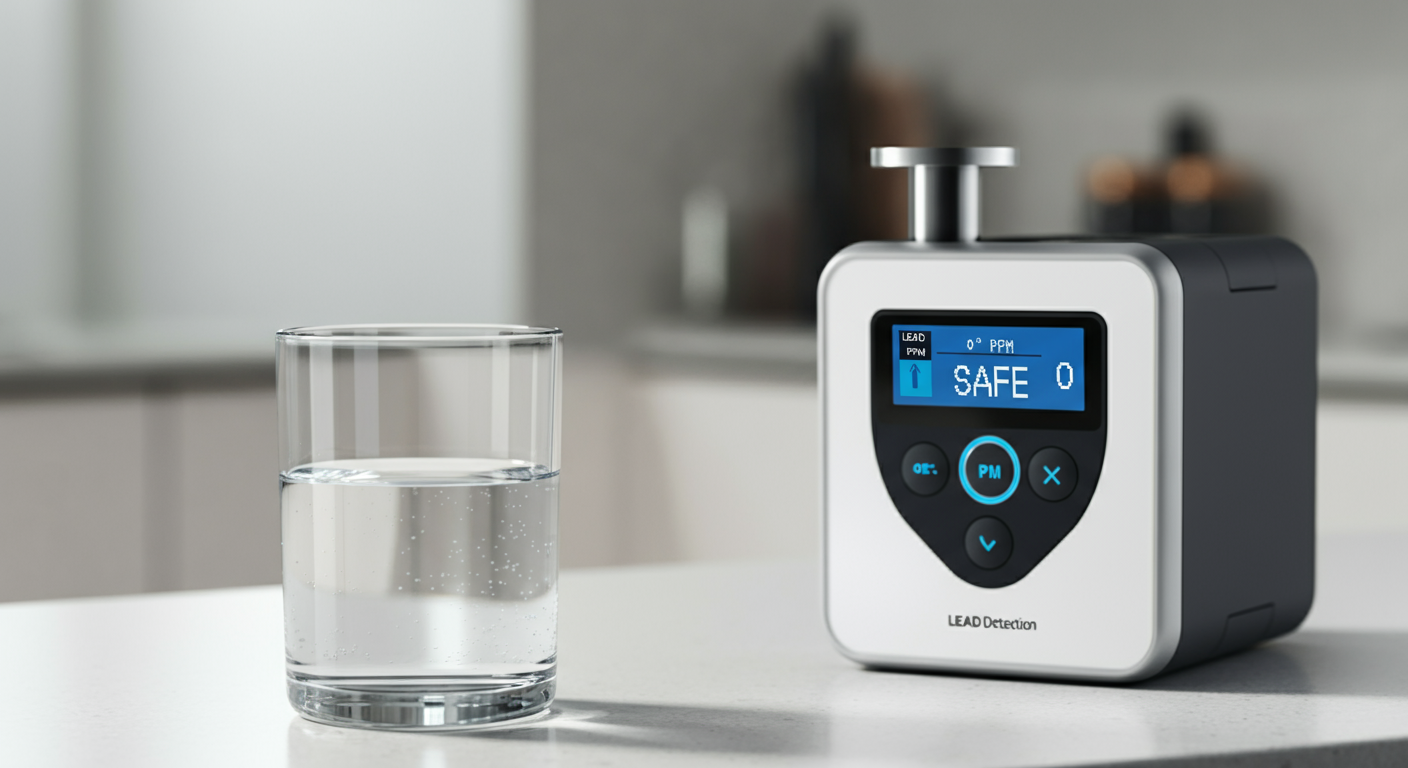
A clear glass of tap water sits beside a lead detection machine displaying a 'SAFE' reading on a clean countertop| Image Credit: TIL Creatives
Why portable detection still mattersIndeed, the scientific basis of the technology involved in lead detection persists even today. Researchers are still working on developing improved techniques for lead ion sensing in water samples. There is further research being conducted to develop techniques that are quicker, cheaper, and portable.This persistence of scientific inquiry into the problem leads us to another conclusion – the contamination by lead ions is not something that happened in the past and does not require further attention. The relevance of lead testing lies in the fact that lead ions may arise due to aged infrastructure and improper regulation of such infrastructure.More than a classroom science projectThere is a likelihood of emphasis on novelty when talking about stories involving young inventors.
The project by Rao survived because the problem he sought to solve had become urgent for the families in the country. There were stories and examples from different families regarding the difficulty of knowing whether water is contaminated until it causes harm.The power of Rao's story was in its simplicity. A young boy realised that even ordinary tap water can cause harm to someone, and then tried to create a device that would alert people to this problem.
In this way, the creation became more interesting not only for a science competition but also in general.Reportedly, children and fetuses are highly vulnerable to lead exposure due to biological and behavioural factors. Such circumstances can account for the continued interest of researchers in developing methods of faster diagnosis.The story of Rao’s lead detector keeps on living due to the fact that the problem it addresses and the solutions it offers have a great deal of relevance to real life. There are more research efforts in terms of water safety conducted by federal agencies, but the basic concept behind the invention is very simple: people should know about the safety of the water they drink.






 English (US) ·