

 5 hours ago
4
5 hours ago
4
ARTICLE AD BOX
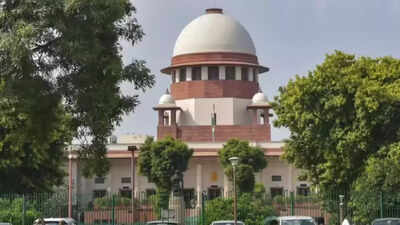
New Delhi: Noting that the social evil of dowry still prevails showing the ineffectiveness of the anti-dowry laws and at the same time the law is being misused by women for ulterior motives, Supreme Court Monday said this contradiction needed to be resolved as it is creating judicial tension.A bench of Justices Sanjay Karol & N K Singh highlighted this issue while convicting a man and his 94-year old mother in dowry death case when a 20-year old girl burnt to death in 2001 for not fulfilling the demand for a colour television, a motorcycle and Rs 15,000 cash. Bringing the curtain down on the case after almost a quarter of century, the court awarded life imprisonment to the husband but refrained from incarcerating the mother considering her old age.The bench expressed concern over delay in deciding the case and passed a series of directions for social measures to tackle the menace of dowry by spreading awareness among youth as the law had been ineffective in curbing the practice.“While on the one hand, the law suffers from ineffectiveness and so, the malpractice of dowry remains rampant, on the other hand, the provisions of this (Dowry Prohibition) Act have also been used to ventilate ulterior motives along with Section 498-A, IPC.
This oscillation between ineffectiveness and misuse creates a judicial tension which needs urgent resolution. While this urgent resolution cannot be stressed upon enough, at the same time it is necessary to be recognised that particularly when it comes to the giving and taking of dowry, this practice unfortunately has deep roots in society, hence, it not being a matter of swift change, instead needs concentrated effort on part of all the involved parties, be it legislature, law enforcement, judiciary, civil society organisations etc,” the bench said.In this case a 20-year old Nasrin was set on fire by pouring kerosene oil on her and she died within a year of her marriage. The trial court convicted both her husband and mother-in-law but Allahabad HC set aside the conviction and acquitted them. The HC decision was based on one part of the deceased father’s statement in which she said that his daughter was happily married.Setting aside HC order and convicting both the accused, SC said, “When the harassment for dowry is proved and so is the fact that such harassment was made soon before her death, then a mere statement of one of the witnesses that she was apparently happy, would not save the Respondents from guilt”.“The HC appears to have been misdirected by the use of the word ‘happily’, at least insofar as the testimony of PW1 (father) is concerned. Reading the entire statement as extracted herein above, clearly establishes that the deceased went back to her matrimonial home having been persuaded and assured by her father. He also states that she had been assaulted and dowry had been demanded from her. Therefore, the use of one word does not colour the entire tenor of the evidence.
The sum of the evidence is to be understood, taking into account all aspects testified to therein,” the bench said.As the present case took 24 years to be concluded, SC said there would be many such similar cases and requested all high courts to take stock of the situation, ascertain the number of cases pending dealing with Section 304-B, 498-A from the earliest to the latest for expeditious disposal.









 English (US) ·