

 1 hour ago
5
1 hour ago
5
ARTICLE AD BOX
The NEET paper leak has put the NTA under renewed scrutiny as a CBI enquiry begins. The row has revived earlier warnings and reform proposals on exam security, blacklisting and testing infrastructure.
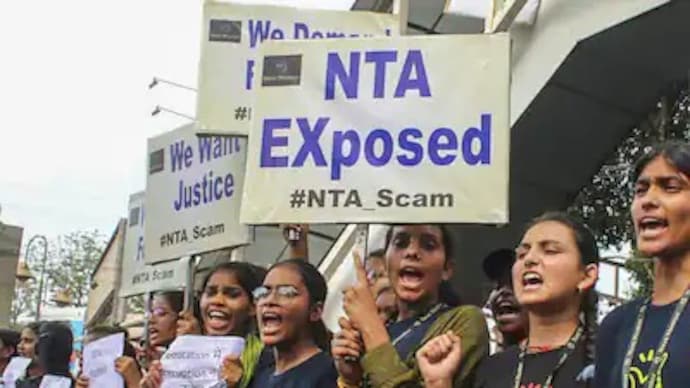
While the NTA and the CBI attempt to determine what went wrong this time, both the Parliamentary Panel and the HLCE appointed by the Centre in 2024 had already identified the core problems and suggested sweeping reforms.
The NEET paper leak has triggered anger among aspirants and their families. The opposition has urged Gen Z to hit the streets like the youth movements in Nepal and Bangladesh, while yet another CBI enquiry has been launched.
“The National Testing Agency (NTA)’s performance in the last year has not inspired much confidence,” the Parliamentary Standing Committee noted in its report in December 2025. It had asked the NTA to get its “act together” to ensure the sanctity of examinations is not compromised in the future.
Six months after these scathing remarks and a series of recommendations, the NTA once again finds itself at the centre of a storm.
While the NTA and the CBI attempt to determine what went wrong this time, both the Parliamentary Panel and the High-Level Committee of Experts (HLCE) appointed by the Centre in 2024 had already identified the core problems and suggested sweeping reforms. These included recommendations for leak-proof Paper and Pen Tests (PPT) and hack-proof Computer-Based Tests (CBTs).
India Today revisits the sharp criticism levelled against the NTA and the recommendations proposed to reform the National Testing Agency.
BLACKLISTED FIRMS UNDER SCANNER
Alarmingly, the Standing Committee pointed out that several firms involved in paper setting, administration, and evaluation had been blacklisted by one organisation or state government, yet continued securing contracts from other states or agencies.
The Committee observed that such blacklisted firms must not be engaged for any entrance examination by the NTA or state governments. It recommended that the NTA compile a nationwide list of blacklisted firms, along with the persons and entities associated with them, to prevent them from securing future contracts.
Notably, the HLCE, appointed by the Centre in October 2024, had also recommended that “testing centres with records of past malpractices must be blacklisted.”
The Parliamentary Standing Committee on Education, in its Report 371, highlighted the NTA’s troubled record in 2024 itself.
Of the 14 competitive examinations conducted by the NTA in 2024, at least five faced major issues. As a result: UGC-NET, CSIR-NET and NEET-PG were postponed, NEET-UG saw instances of paper leaks, and CUET (UG/PG) witnessed delayed results.
The Committee also noted that CUET results had repeatedly not been declared on time in recent years.
2024: THE YEAR THAT SHOOK THE SYSTEM
The return of the Modi government to power in 2024 was soon overshadowed by nationwide protests over the May 2024 NEET paper leak. Union Education Minister Dharmendra Pradhan had then promised to clean up the system.
By June 2024, the Union Education Ministry constituted a High-Level Committee of Experts (HLCE) to ensure transparent, smooth, and fair conduct of examinations through the NTA. The committee was tasked with recommending reforms in: examination mechanisms, data security protocols, and the structure and functioning of the NTA.
The HLCE was chaired by former ISRO chief K. Radhakrishnan and included six other experts. It submitted its report in October 2025. The Parliamentary Standing Committee of 2025 relied heavily on its findings and recommendations.
HLCE’s ROADMAP FOR LEAK-PROOF EXAMS
The HLCE proposed a hybrid model for Paper and Pen Tests (PPTs). It recommended encrypted digital delivery of question papers to secure servers at testing centres, similar to the system used in CBTs.
The report suggested that question papers should be decrypted and printed directly at testing centres using high-speed printers under strict supervision.
“Question papers will be distributed to the students at the centre. This would be a prudent and pragmatic method to eliminate potential breaches during the printing, storage, and transportation chains of PPT. Pilot testing of this process should be undertaken before its operational induction,” the HLCE report stated.
To prevent leaks at traditional printing presses, the HLCE recommended banning mobile phones inside printing facilities. It also proposed mandatory CCTV surveillance with recordings preserved for one year.
Even misprinted papers, the committee said, should be secured by the NTA, documented, and destroyed under strict supervision.
SECURING TRANSPORTATION AND REDUCING PRIVATE DEPENDENCE
For transportation of question papers, the HLCE recommended sealed trunks and secure transfer mechanisms, including geo-tagging.
The committee also backed strengthening the NTA’s own infrastructure using surplus funds, reducing dependence on private players and outsourced testing centres.
“NTA may build 1,000 secured testing centres in government institutions across the country in a phased manner,” the HLCE recommended.
While the Parliamentary Standing Committee continued to place faith in Paper and Pen Tests, the HLCE recommended eventual migration to CBTs, or at least a hybrid system involving computer-assisted secure PPTs.
- Ends
Published By:
Nitish Singh
Published On:
May 14, 2026 02:24 IST






 English (US) ·