

 1 hour ago
4
1 hour ago
4
It is a sunny, quiet afternoon in Mankachar town of the South Salmara-Mankachar district, located at the south-westernmost tip of Assam. A group of traders sit beside a tea shop opposite a wall graffiti of Assam’s cultural icon Zubeen Garg, even as the more devout population of the town centre prepares to shutter their shops and head to the mosque for afternoon prayers.
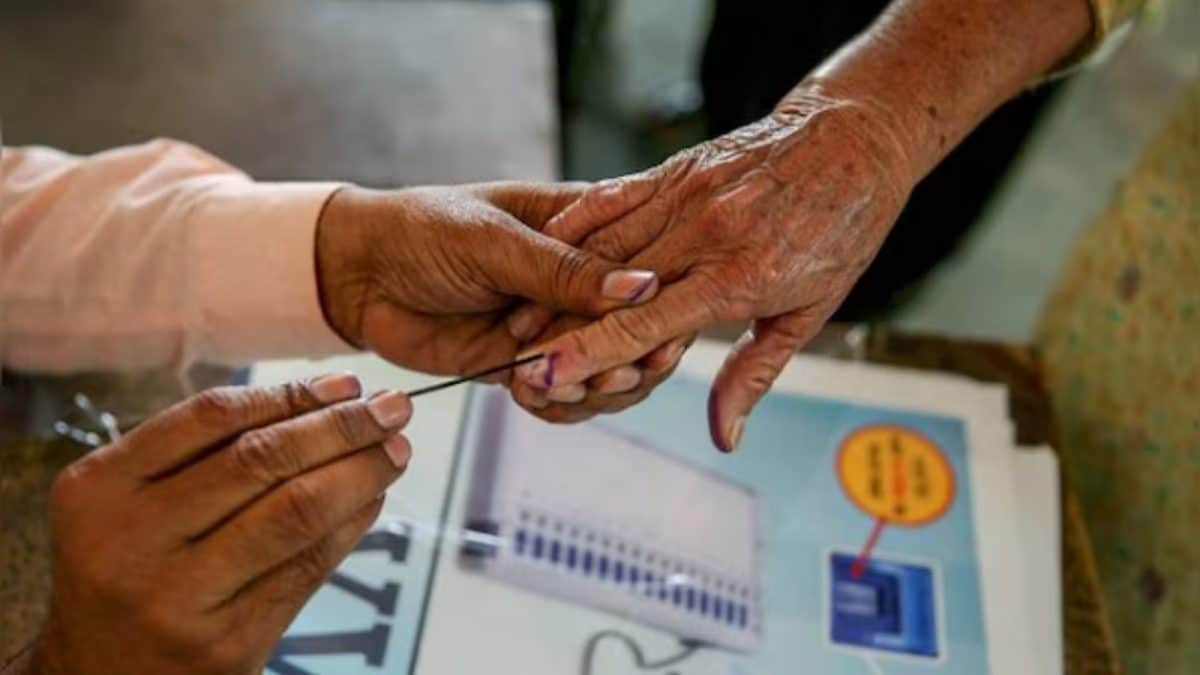
With over 95% of the district’s population practising Islam, the region’s about 4.15 lakh voters were electing two legislators — one from Salmara South and one from Mankachar — till the 2021 Assembly elections in the State. But as the State heads to the polls on April 9, the electorate here will be picking one candidate to represent them — a consequence of the 2023 delimitation exercise in Assam, which saw the two constituencies merging into one, named Mankachar.

The region, which has elected a combination of MLAs from the All India United Democratic Front (AIUDF) and the Indian National Congress for at least the last decade, is now set to see a contest between the AIUDF, the Congress, and Bharatiya Janata Party (BJP) ally Asom Gana Parishad (AGP) for the one seat in Assam’s legislative Assembly.
Residents here, who identify as Khilonjia (indigenous) Muslims, settled here in 1951 or before and recorded in the 1951 National Register of Citizens, speak about the lack of roads, healthcare, and jobs, even as they find themselves pondering over how to respond to the ruling BJP’s “anti-Miya” and “ghuspaithiya” (infiltrator) rhetoric. While some residents say the hurt caused by this rhetoric will make it an even fight between the Congress and the AIUDF, others rationalise the hurt as part of the insults Muslims have always faced in Assam.
The district is bound by the international border with Bangladesh to the west and the vast expanse of the lower Brahmaputra to the north, beyond which lies Dhubri and the rest of Assam. To the east lies the State of Meghalaya, which has served as a hub for most of the region’s trade. The only roadway connecting the region to the rest of Assam runs through Meghalaya, and a boat ride to Dhubri is about three-four hours long.
At the gathering of traders in the town centre, 60-year-old Zakiul Islam paints a bleak picture. “What have we got in the last decade or two. There is no development — the roads are the same, we have to travel for hours for something as simple as an X-ray, and each household has youths unable to secure jobs despite finishing undergraduate and postgraduate degrees. On top of that, the trade with Meghalaya has almost come to a halt over the last few months,” Mr. Islam said.
In neighbouring Meghalaya, increasing communal violence over the last few months between the Garo tribal communities and Bengali-speaking Muslims of West Garo Hills has further strained tensions between Assam and Meghalaya, which already dispute the State border. “I don’t know whether it is because we are Muslims or because we speak Bengali. But none of us has been able to go to our regular markets in Meghalaya’s Tura region or beyond for business,” 49-year-old cloth merchant Abdul Wahid said.
A few hundred metres away, Muhammad Abdul Hussain (59) sits at his convenience store. “I am an Indian citizen, am I not? When the CM starts speaking this language, it will only hurt their party’s ally in this region. All of this is just politics at the end of the day. The politicians will fight it out amongst themselves, and we will be left as we are with nothing changing,” Mr. Hussain said.
The ruling BJP’s ally, the AGP, is contesting the Mankachar seat, with Zabed Islam as its candidate. He is pitted against the Indian National Congress’ Mohibur Rohman and the AIUDF’s Abdul Salam Shah. While both Mr. Islam and Mr. Rohman have been MLAs from this region before, Mr. Shah has not and is replacing the AIUDF’s incumbent MLA from the seat, Aminul Islam, who made a flurry of party switches just ahead of elections, before settling in the Congress.
The AIUDF pick of Mr. Shah, who had contested the seat on a BJP ticket in 2016, comes even as the party has had a history of sending party president Badruddin Ajmal and his son Abdur Rehman Ajmal to the Assembly from here.
Back near the tea shop in the town centre, Mr. Zakiul Islam, who trades in dry fruits and betelnuts, speaks highly of Zabed Islam and his parents, both of whom have represented Mankachar in the Assam Assembly for multiple terms. “Of course, we are hurt when we hear the CM talk the way he does. It started with Hindu-Muslim politics, then Himanta’s (Chief Minister Himanta Biswa Sarma) anti-Miya speeches, and now the BJP central leadership is pushing the ghuspaithiya language. But what do we do? Now, ruling party leaders are visiting us and promising peace with Meghalaya, and roads. I don’t believe them. But what I believe in is Zabed Islam,” Mr. Zakiul Islam said.
“We don’t know how to explain the lack of development in our region for decades. It is either because the MLAs have been apathetic or because they have been incapable, because they were in Opposition parties or had won as independent candidates,” Mr. Wahid said, continuing from Mr. Islam’s remarks.
“But what I do know is that every single person in our town who has a government job or has worked in Anganwadis or as an ASHA worker got these jobs because Zabed Islam’s parents ensured it,” Mr. Zakiul Islam said.


 English (US) ·