

 1 hour ago
2
1 hour ago
2
ARTICLE AD BOX
3 min readUpdated: Feb 20, 2026 06:50 PM IST
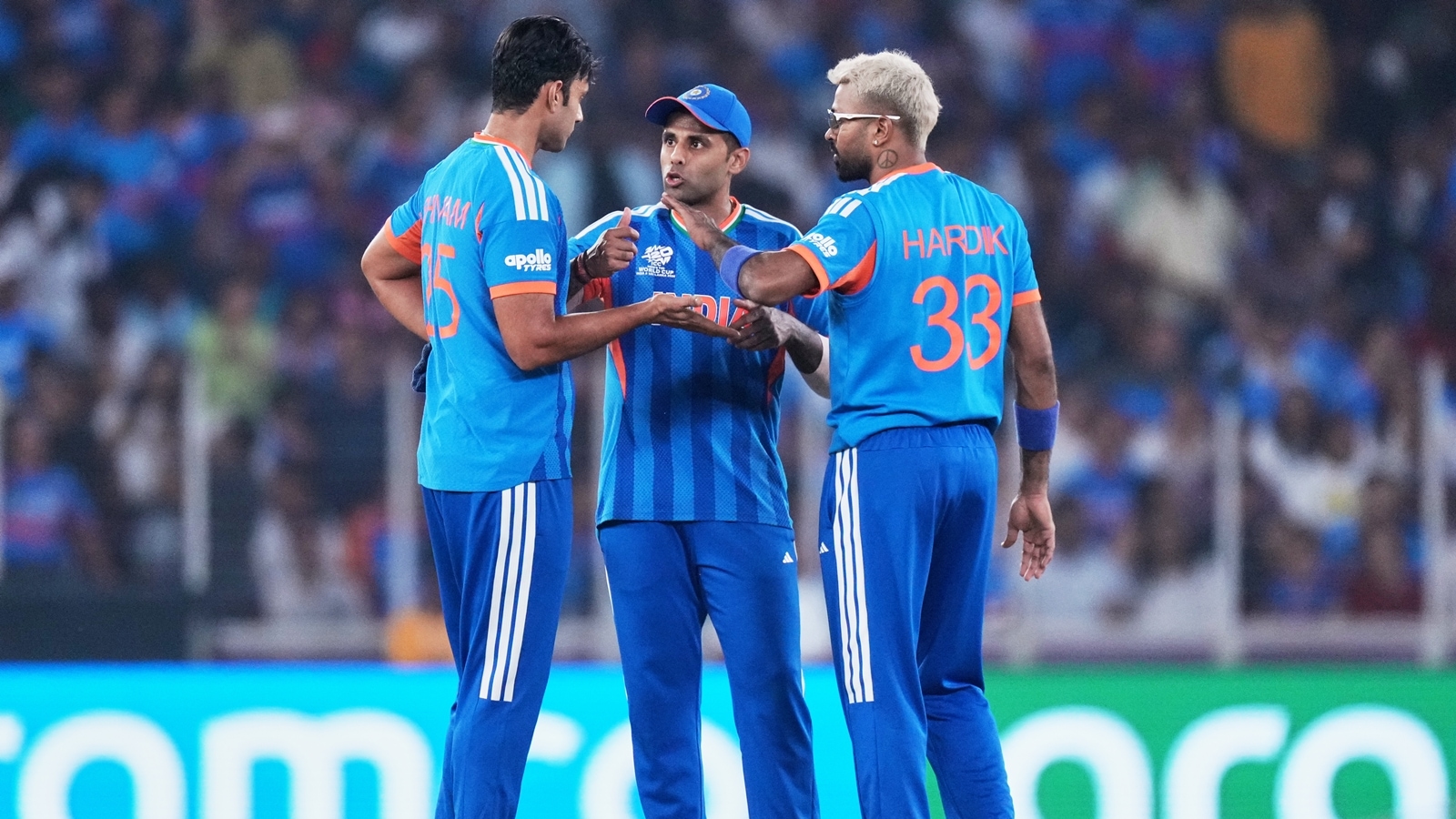 India have qualified for the Super Eights after winning all their matches in the group stage. (AP Photo)
India have gone through to the Super Eights of the 2026 T20 World Cup as the top-ranked team in Group A and yet, a look at their upcoming fixtures show that every single team they will be facing are those that have also finished top of their respective group. This is different from what is usually the case in international tournaments across both team and individual sports – a participant tends to face teams who have finished with lower ranks in the previous stage and thus, at least on paper, have favourable chances of progressing further.
ARTICLE CONTINUES BELOW VIDEO
In the 2026 T20 World Cup, India are in the same group as Zimbabwe (winners of Group B), West Indies (winners of Group C), and South Africa (winners of Group D). The other team consists of Pakistan, Sri Lanka, England and New Zealand, all of whom have finished second in the afforementioned groups. This is a by product of the International Cricket Council (ICC) assigning seedings to teams based on their T20I rankings before the tournament itself.
ICC’s seeding system for the 2026 T20 World Cup
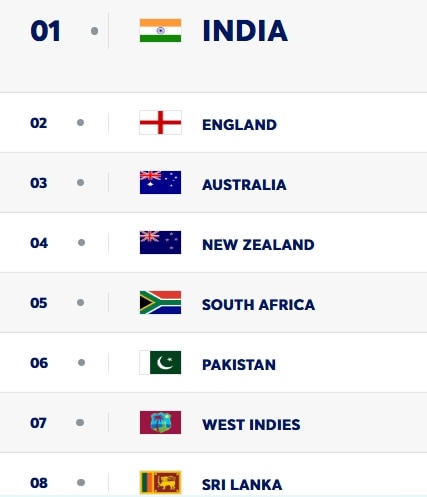 The eight seeded teams based on their ICC rankings before the tournament. (Screenshot: ICC website)
The top eight teams in the ICC men’s T20I rankings were seeded as the top two teams in each of the four groups in the group stage. Among these, the top ranked India were assigned as A1, that is the first team in Group A, second-placed England were assigned C1, third-placed Australia were B1 and fourth-placed New Zealand were D1.
In the Super Eights, the ICC was more specific with the seedings. India were to be the first-placed side in Group 1, designated as X1; X2 was given to Australia. West Indies were X3 while South Africa were X4. Group 2 seedings were England (Y1), New Zealand (Y2), Pakistan (Y3) and Sri Lanka (Y4). If any of these teams failed to make it to the Super Eights, the team that made it at their expense is assigned their seeding in the Super Eights. It thus means that Zimbabwe took seeding assigned to Australia in Group 1 of the Super Eights.
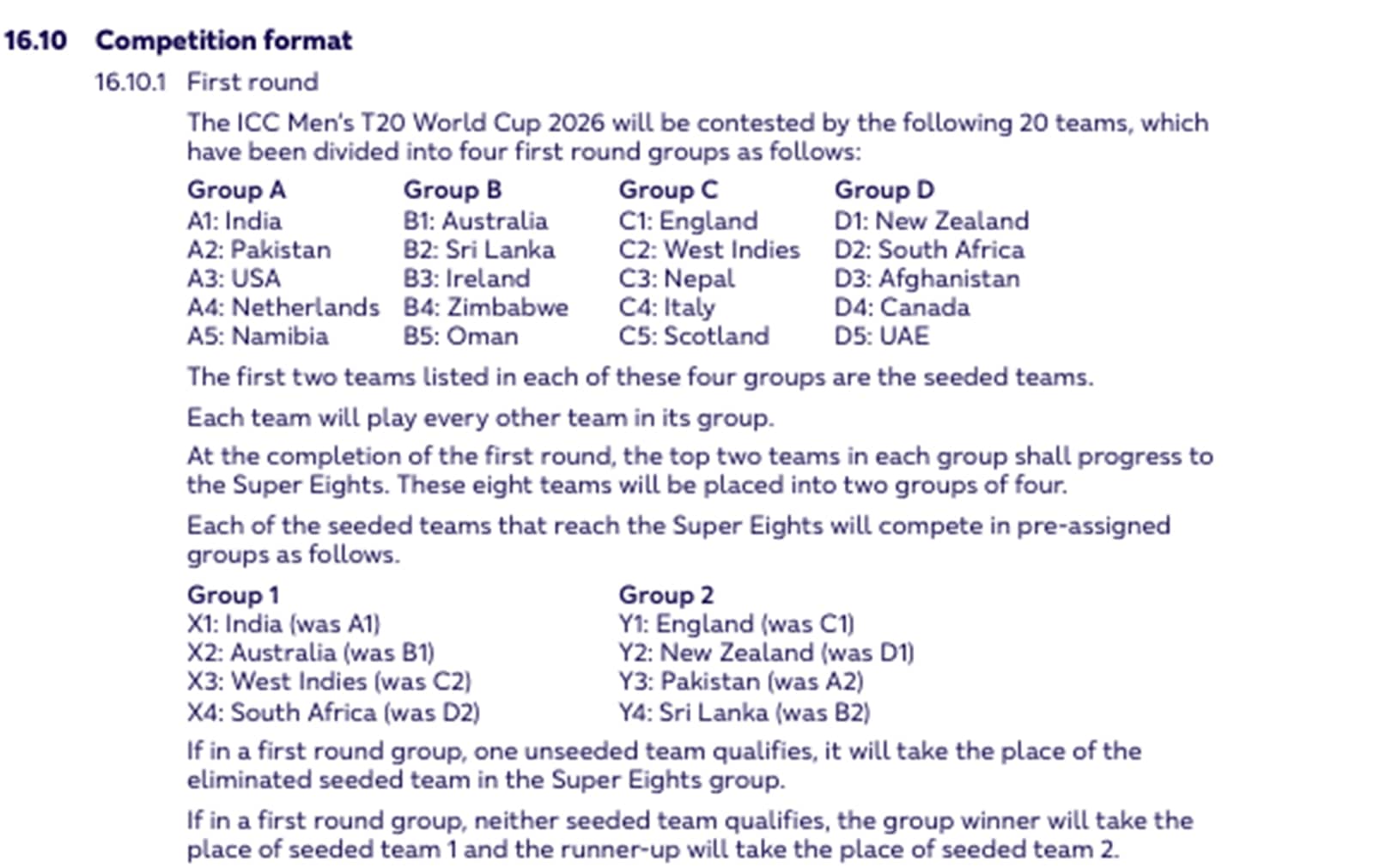 The format according to the ICC’s playing conditions. (Screenshot: ICC Men’s T20 World Cup 2026 Playing Conditions PDF)
The seedings thus made a team’s final ranking in the group stage effectively irrelevant. West Indies and South Africa were always meant to be in Group 1 if they qualified, even if they finished second in their respective groups. Zimbabwe took Australia’s seeded spot and hence would’ve been in Group 1 regardless of whether they finished first or second in Group B.
This is the second time that this sort of a seeding system has been implemented in this tournament, with the first instance of it being in the last edition that was co-hosted by the USA and the West Indies. At the time, the three teams in Group 1 apart from India were Afghanistan Australia and Bangladesh. While Australia had also finished top of their Group, Bangladesh and West Indies had finished second.






 English (US) ·