

 1 hour ago
3
1 hour ago
3
ARTICLE AD BOX
5 min readFeb 20, 2026 05:20 PM IST
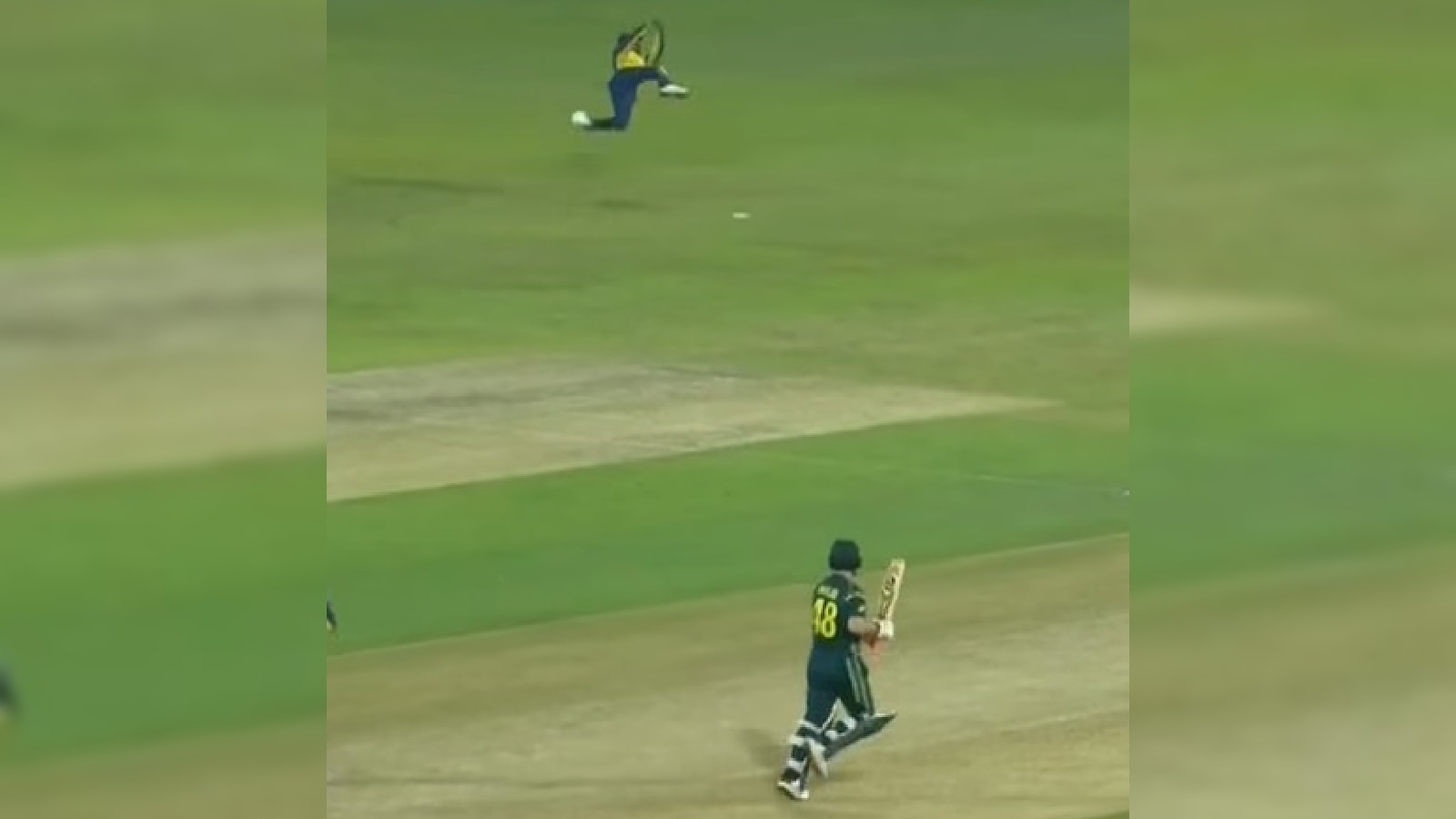 Pathum Nissanka’s air-borne catch of Glenn Maxwell’s reverse sweep. (Screengrab via ICC YouTube)
The Flying Dutchman is a mythical ghost ship destined to sail forever past elusive shores. In sports lore, it has been twisted to denote any Dutchman (often a footballer) that succeeds. The Dutch forward of the 1950s, Servaas “Faas” Wilkes was the OG; his successors Marco van Basten and Arjen Robben wore the moniker for their explosive pace. Roelof van der Merwe is arguably the only “Flying Dutchman” ever in cricket.
ARTICLE CONTINUES BELOW VIDEO
Fly he did when Tilak Varma’s mistimed hack was to drop and kiss the Motera surface. Prowling the long-off fence, he took three gentle strides to his right (he is naturally left-handed), realised the ball was beyond his reach, and leapt towards his right to grab the ball with both hands. He is 41, the tucked-in shirt exaggerates the love handles, and the once flowing golden locks have thinned, but the agility and reflexes were intact.
He effortlessly glided into the leap, no jarring or rebelling parts, just a fluid extension of his limbs. He celebrated joyously. He loves to celebrate, the excesses almost wrecked his career, before he resurrected himself to turn up for South Africa, the country of his birth, made a profitable career out of franchise cricket, and revived his international career by switching to the Netherlands. For the Indian audience, he bridges generations. He was on the ground when Sachin Tendulkar scored the first double hundred in ODIs; he was Anil Kumble’s teammate at RCB. Fifteen years later, in a different garb, he took a screamer of Tilak Varma. Tilak was five when Van der Merwe made his international debut.
In a World Cup where buttery fingers had been the theme—India have shelled nine, just behind Ireland on ten—and where dropped ones altered the destinies of teams, spectacular catches were born too. None more eye-twitching than Pathum Nissanka’s air-borne pouch of Glenn Maxwell’s reverse sweep. Like a spider leaping from one hard-spun web to the other, he took off stealthily, flipping his body back like a rainbow, the supple frame suspended in the air and suspending belief, arms elongating, the centre of gravity shifting through the torso, to snatch the ball, speeding like a bullet, before it would whizz by him. The most astonishing part was that he was not stretching forward or fully back, a straightforward manoeuvre, but towards the side, in a semi-horizontal plane. Freeze-frame the exact moment he swoops the catch, he is like a vaulting catapult. A few European football scouts would be tempted to offer him a trial.
Moments ago, he had spilled a sitter off Maxwell. A fiery, spunky character, he was ready to atone. “After the first catch went down, I was disappointed. I made up my mind in that moment that I needed to do something special for the team,” he said. The best catches are the products of instinct: split-second improvisations through which inner genius can surface. The catch came from his defiance, his entire career owes to this virtue, his single-minded drive to not let opportunities fly by him, like his catch of redemption.
His quiet captain Dasun Shanaka, though, nearly recreated the Jason Gillespie-Steve Waugh collision with Dunith Wellalage in the same country. Tashinga Musekiwa’s miscued shot was floating toward wide long-off and Wellalage seemed to come under it. Shanaka sprinted from mid-on and flung himself to pocket the catch, careening past Wellalage like an expert cabbie. Thankfully, no disfigured nose or torn tibia.
It would perhaps require the cricketing equivalent of a Produnova vault to beat Nissanka’s catch, but some run close. Like the near-identical swoops of Zimbabwe’s Brian Bennett (Oman) and Tony Munyonga (against Australia). Both were roving near the mid-wicket fence when they saw the ball speeding towards the boundary. Both teed off with explosive pace, lunged sideways at full-pelt and clasped the ball before it brushed the blades of grass. If Nissanka’s catch was born out of imagination and instinct, these were marvels of athleticism. Bennett’s was like a forward lunge in rugby, a sport he had played well into his teens. He embodies the cussed attitude of Southern Africa.
Story continues below this ad
Munyonga’s catch was arguably better because it was closer to the ropes, the shot was flatter and he caught it in just one hand, with a slithering dash. Munyonga is the quintessential boy on the hot tin roof, bubbly and restless, always wanting to make an impact. The all-rounder can give the ball a mighty biff, just as he could give it a fierce tweak.
Often, the catch of the tournament reels feature a lot of “soaring Kiwis.” This time, they have been uncharacteristically sloppy, even though the Mark Chapman-Daryll Mitchell relay catch to eject UAE’s Alishan Sharafu was special, but not in the breathtaking bandwidth. Sharafu’s flat slog-sweep almost crossed the ropes before Chapman sprung and pulled off a volleyball-style smash block. And Mitchell was perfectly positioned to devour the rebound. Chapman is a master of relay catches and by-the-rope screamers. The more serious phase of the tournament ushering in, more blinders are on the menu. But can someone beat the slinging Sri Lankan?




 English (US) ·