

 1 week ago
13
1 week ago
13
ARTICLE AD BOX
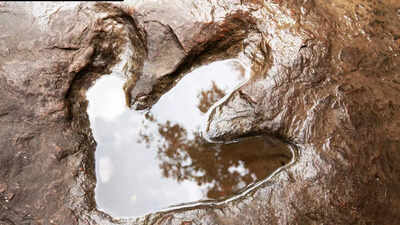
The plateau does not look special at first. Dry ground. Pale rock. Wind moving through long grass. It is the kind of place people pass without slowing down. Yet beneath this quiet surface, something old has been waiting.
In central Bolivia, inside Torotoro National Park, stone slabs carry the marks of movement from a vanished world. Not bones, not teeth, but footsteps. Thousands of them. Some pressed deep into mud, others lighter, almost hesitant. Together they suggest routine rather than chaos. Animals moving through a place they knew well. What surprised researchers was not only the number of tracks but also their setting. Many were formed at the edge of water.
Some may even belong to dinosaurs that were partly swimming, leaving traces as they moved through shallow lakes.
16,000 dinosaur footprints in Bolivia, and some were underwater
The site is known as Carreras Pampa, a wide fossil surface spread across central Bolivia. Researchers have identified more than 16,000 individual footprints here, making it one of the largest dinosaur tracksites ever recorded. The prints are preserved on what was once a prehistoric shoreline. Millions of years ago, this area sat beside a freshwater lake.
Over time, layers of sediment hardened into stone, locking the impressions in place.
Unlike fossil bones, which are often scattered, these tracks remain where they were made. That makes the site especially valuable for understanding behaviour rather than anatomy.
How old are the footprints
The tracks date back to the late Cretaceous period, roughly 68 million years ago. This was near the end of the dinosaur era, not long before the mass extinction event.
At that time, the region would have looked very different. Instead of dry plateaus, there were lakes, wetlands, and soft mud flats. These conditions are ideal for preserving footprints. A firm but damp surface can hold shape long enough for new sediment to settle on top, sealing the impression before erosion erases it.
Why do the footprints all point the same way
One of the most striking details is the alignment. Many of the footprints point in a similar direction, running parallel rather than crossing randomly. Researchers, who published their research on PLOS One, think this suggests repeated movement along the lake’s edge.
Instead of cutting across open ground, the dinosaurs appear to have followed the shoreline. This kind of pattern hints at routine. Perhaps the water offered food, cooling, or an easier route through the landscape. It also suggests the animals were not panicking or fleeing. They were moving calmly, possibly over long periods.
Which dinosaurs left these tracks
Most of the footprints belong to theropods. These were bipedal, three toed carnivorous dinosaurs, some small, others much larger.
The prints vary in depth and clarity. Some are sharp and deep, showing full contact with soft mud. Others are faint, distorted, or incomplete. This variation matters. It suggests different speeds, weights, and even different behaviours. In some cases, the dinosaurs may have been walking normally.
In others, they may have been buoyed by water, with only part of the foot touching the ground.
Were some dinosaurs actually moving through water
Yes, that is one of the more unusual findings. Ripple marks from ancient water currents sit right beside many of the tracks.
These ripples form only in shallow water, not dry ground. Some footprints cut through them, while others appear stretched or smeared. Researchers believe this points to dinosaurs wading or swimming close to shore. When an animal swims, its feet may scrape the bottom only occasionally, leaving shallow or partial marks.
These underwater traces are rare, which makes the site even more important.
What does the geology reveal about the environment
The rock layers around the footprints tell a consistent story.
Fine sediments, ripple patterns, and repeated track layers all suggest a stable lake environment that lasted for a long time. This was not a brief floodplain but a place dinosaurs returned to again and again. Predators seem to have preferred the edge rather than crossing open water. The shoreline likely acted as a natural pathway, guiding movement and concentrating activity in one zone.
Why this site matters beyond Bolivia
Carreras Pampa does more than add another dot to the fossil map. It shows how dinosaurs interacted with water landscapes, something that bones alone rarely reveal. Tracks capture moments. Direction, spacing, hesitation. Together they offer a quieter, more human view of prehistoric life. Not dramatic hunts or disasters, just animals going about their lives.The plateau is silent now. Wind replaces footsteps. But the stone still holds the rhythm of movement, waiting for those willing to look down rather than ahead.







 English (US) ·