

 1 week ago
7
1 week ago
7
ARTICLE AD BOX

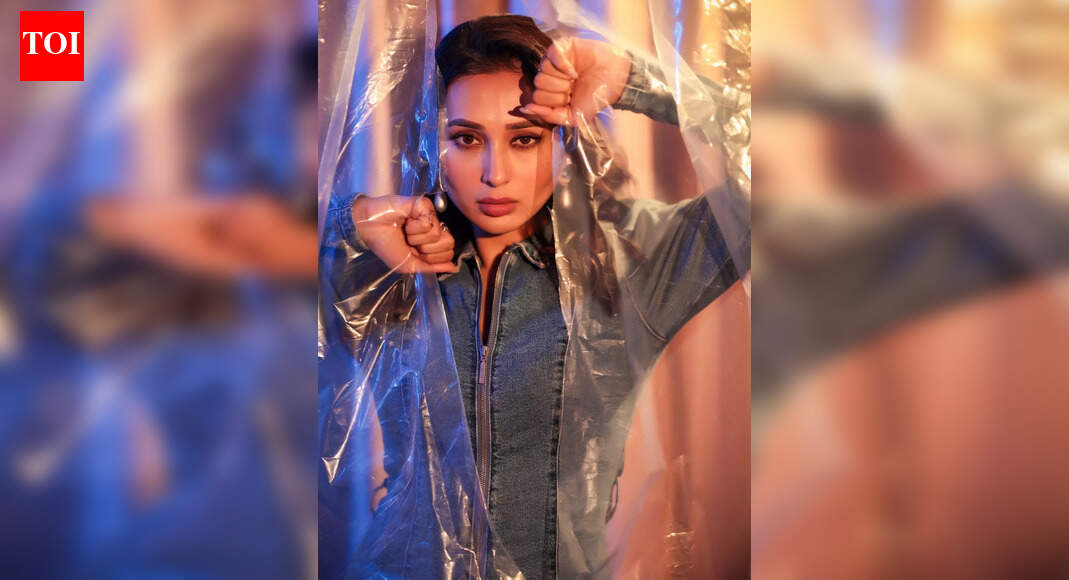
Bhagyashri Borse, an emerging talent in Tollywood, recounts her thrilling experience of diving into the languages of Telugu and Tamil to embody her characters in films like Kaantha and Lenin. She underscores her dedication to character development through detailed journaling and actively seeks scripts where women's narratives take center stage, championing strong female representation in cinema.
When Bhagyashri Borse arrived in Tollywood from Chhatrapati Sambhajinagar (formerly Aurangabad), she didn’t just step into a new industry; she entered an entirely new world, one where she didn’t speak the language.
Today, she is steadily carving a space for herself as a promising newcomer with films such as Mr. Bachchan, Kingdom, Andhra King Taluka and the Tamil–Telugu bilingual Kaantha. As she prepares for Lenin with Akhil Akkineni, Bhagyashri speaks to Hyderabad Times about learning new languages, building characters from scratch, navigating self-doubt, and keeping life beyond work in perspective.‘Before my south film debut, I couldn’t speak Telugu or Tamil’Bhagyashri grew up in Chhatrapati Sambhajinagar (formerly Aurangabad) and had little exposure to Telugu or Tamil films.
So entering South Indian cinema required adapting to new languages and cultures. “Before I came to south India, I couldn’t speak these languages. I started watching Telugu films just to understand the rhythm and style,” she says. The learning, she adds, is ongoing. “With Lenin and other projects coming up, I’m continuing to learn Telugu every day.
Now I can talk basic Telugu and understand Tamil.”Playing Kumari in the period drama Kaantha required Bhagyashri to navigate the cultural landscape of 1950s Madras. To achieve this, she undertook a deep dive into the era’s cinema. “I studied Savitri ma’am’s films for emotional subtlety and old classics to capture the specific accents and mannerisms of the time.
The research helped me master the bilingual lines while embodying the gentle innocence of a Burmese refugee,” she says, adding, “Kumari is gentle and believes in the goodness of the world. That innocence is her core, and it reminded me to hold on to my own, no matter what.”‘I keep a diary to understand who my characters really are’For Bhagyashri, preparation is deeply personal and rooted in understanding a character beyond the script.
“I keep a diary where I map out my character; where they come from, what they’ve been through, and how they might react in different situations,” she says.She believes this process helps her connect emotionally. “I try to deeply connect with my character and brainstorm. It gives me a clear picture of who they are,” she explains, adding, “I wouldn’t call myself a full method actor, but this is how I prepare.”‘I prefer scripts where the story wouldn’t work without the female character’Reflecting on her evolving approach to choosing projects, Bhagyashri admits her perspective has matured with experience. For her, it always comes back to the structural necessity of a role. “I prefer scripts where the narrative actually needs the female character — where if you removed her, the story would fall apart,” she explains, adding, “The focus is on finding roles that challenge me and give women a genuine voice on screen.
”






 English (US) ·